
July 24, 2026
In this article
- What You Will Learn From This Blog
- What is AI Bookkeeping Software?
- How AI Bookkeeping Software Works
- Top Ways AI Bookkeeping Software Saves Time
- How AI Bookkeeping Software Reduces Errors and Save Time
- Key Features To Look For In Small Business Bookkeeping Software
- Example: How AI Saves Time Every Week
- AI Bookkeeping Software Vs Traditional Bookkeeping Methods
- Why CashBooks.io is the Smart Choice For Modern Businesses
- Our Expert Perspective
- Key Takeaways
- FAQs
Running a business means managing sales, expenses, invoices, bank records, and financial reports every day. Many owners still spend hours entering data by hand, checking numbers, and fixing mistakes. AI bookkeeping software changes this process by using smart technology to record, organize, and review financial data with less manual work. As a result, business owners can spend more time serving customers and growing their business.
Good books help a business make smart choices, manage cash flow, and plan ahead. Small errors in records can lead to wrong reports, late bills, or lost chances. Many firms now use small business bookkeeping software with AI tools to save time, cut errors, and keep data right.
What You Will Learn From This Blog
- Understand what AI bookkeeping software is.
- Learn how AI processes financial data.
- Find out how automation saves valuable business time.
- Discover how AI reduces common bookkeeping mistakes.
- Know which features matter most before choosing software.
- Compare AI bookkeeping with traditional bookkeeping methods.
- Learn why CashBooks.io is a practical choice for growing businesses.
What is AI Bookkeeping Software?
Traditional bookkeeping requires users to record transactions, match bank statements, organize receipts, and prepare reports manually. AI bookkeeping software performs many of these routine tasks by using artificial intelligence and machine learning.
Instead of asking users to enter every transaction, the software can recognize patterns, classify expenses, detect unusual entries, and recommend the correct accounting category. This reduces repetitive work while keeping financial records organized.
Smart Transaction Recognition
The software reviews transaction details and learns from previous entries. When similar transactions appear again, it can assign the correct account automatically.
Over time, the system becomes more consistent, reducing manual work for business owners and finance teams.
Automatic Expense Categorization
Expense classification often takes significant time when done manually. AI studies vendor names, payment history, and spending behavior to place expenses into suitable categories with greater consistency.
Invoice Processing
Invoices no longer need to be entered one line at a time. The software reads invoice details, captures important information, and records it within the accounting system, reducing manual effort.
Receipt Management
Paper receipts can easily be misplaced. Modern AI bookkeeping software allows users to upload receipt images. The system reads the text, extracts important information, and stores everything in one place for future reference.
Continuous Learning
Artificial intelligence learns from corrections made by users. Each approved transaction teaches the software how similar entries should be handled in the future, making daily bookkeeping faster over time.
Better Financial Visibility
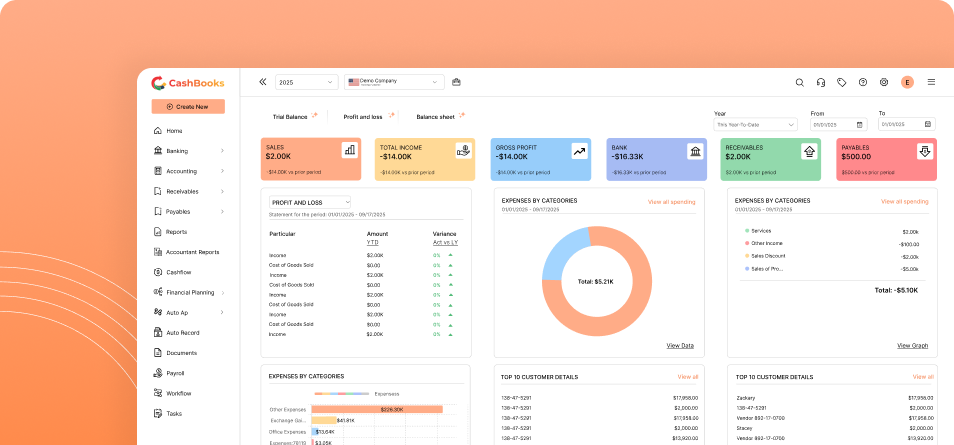
Business owners no longer need to wait until the end of the month to understand their finances. Real-time dashboards provide updated information about income, expenses, profit, outstanding invoices, and cash flow, allowing quicker business decisions.
How AI Bookkeeping Software Works
Understanding how AI bookkeeping software works makes it easier to see why many businesses are replacing manual bookkeeping with automated systems.
The software combines artificial intelligence, machine learning, optical character recognition (OCR), and banking connections to manage financial information with limited manual input.
Bank Data Collection
The software securely connects with business bank accounts. New transactions appear automatically, reducing manual imports and lowering the risk of missing financial records.
Intelligent Data Classification
Each transaction is reviewed using previous accounting history and spending patterns. The system recommends the correct ledger account while maintaining consistent bookkeeping records.
OCR For Documents
OCR technology reads invoices, bills, and receipts from uploaded images or PDF files. Instead of typing every detail manually, users simply review the extracted information before approval.
Duplicate Entry Detection
Duplicate transactions create reporting problems and inaccurate financial statements. AI reviews transaction history and alerts users when similar records already exist.
Error Detection
One of the strongest advantages of AI bookkeeping software is its ability to identify unusual activity. For example, if a utility payment suddenly becomes ten times higher than previous months, the software can flag the transaction for review before reports are finalized.
Real-Time Financial Reporting
Financial reports update automatically whenever new transactions are recorded. Business owners can review profit and loss statements, balance sheets, cash flow reports, and expense summaries without waiting for month-end processing.
Top Ways AI Bookkeeping Software Saves Time
Time is one of the most valuable resources for any business owner. Many bookkeeping tasks are repetitive and take attention away from customer service, sales, and business planning. AI bookkeeping software reduces manual work by automating daily accounting activities while keeping financial records current.
Automatic Data Entry
Entering transactions by hand takes time and often leads to typing mistakes. AI bookkeeping software imports transactions from connected bank accounts and records them automatically. Business owners spend less time entering data and more time reviewing important financial information.
Faster Bank Reconciliation
Matching bank transactions with accounting records is one of the most time-consuming bookkeeping tasks. The software compares transactions, finds matching entries, and highlights only those that need review. This allows businesses using small business bookkeeping software to complete reconciliations much faster.
Quick Invoice Processing
Creating invoices, recording payments, and following up on unpaid bills manually can slow business operations. AI automates invoice creation, records incoming payments, and updates customer balances without repeated manual work.
Receipt Capture And Storage
Searching through paper receipts can waste hours during monthly bookkeeping. Users simply upload a receipt image, and AI bookkeeping software reads the details, records the expense, and stores the document securely for future reference.
Real-Time Financial Reports
Waiting until the end of the month to prepare reports delays business decisions. With small business bookkeeping software, reports update automatically whenever transactions are recorded. Owners always have access to current financial information without creating reports from scratch.
Less Time Spent On Routine Tasks
Businesses often repeat the same bookkeeping activities every day. As the system learns from previous transactions, AI bookkeeping software completes recurring tasks with minimal user input, allowing staff to focus on work that adds greater business value.
How AI Bookkeeping Software Reduces Errors and Save Time
Bookkeeping errors can affect cash flow, financial reports, budgeting, and business decisions. While no software can remove every mistake, AI bookkeeping software greatly lowers the chance of common accounting errors by reviewing data continuously and applying consistent rules.
Consistent Transaction Categories
Manual bookkeeping may classify similar expenses under different accounts. AI studies previous records and assigns transactions to the same category each time, creating more reliable financial reports.
Duplicate Transaction Detection
Duplicate entries increase expenses and create incorrect financial statements. The software checks transaction history before recording new entries and alerts users if similar records already exist.
Missing Transaction Alerts
Sometimes bank transactions are forgotten during manual bookkeeping. AI bookkeeping software compares bank activity with accounting records and identifies transactions that have not been recorded.
Unusual Spending Notifications
AI can recognize spending patterns based on previous business activity. If an expense is much higher than normal or appears unusual, the software flags it for review before reports are finalized.
Better Accuracy During Reconciliation
Bank reconciliation becomes more accurate because the software matches transactions automatically. Only unmatched items require manual attention, reducing the chance of overlooking important records while using small business bookkeeping software.
Reliable Financial Reports
Accurate reports allow business owners to make informed financial decisions. Since the software reviews transactions throughout the accounting process, income statements, balance sheets, and cash flow reports become more dependable.
Key Features To Look For In Small Business Bookkeeping Software
Choosing accounting software is an important business decision. Not every product offers the same level of automation or AI capability. Before selecting small business bookkeeping software, businesses should evaluate features that save time while maintaining accurate financial records.
AI-Powered Automation
The first feature to consider is built-in artificial intelligence. Strong AI bookkeeping software should automate transaction recording, expense categorization, invoice processing, and bank reconciliation while allowing users to review every entry before approval.
Secure Bank Connections
Direct bank integration removes the need for manual imports. The software should connect securely with business bank accounts and automatically import transactions for daily bookkeeping.
Smart Financial Dashboards
Business owners need quick access to financial information. Dashboards should display income, expenses, cash flow, unpaid invoices, profit, and other key financial figures in real time.
Receipt And Invoice Management
Paper documents create unnecessary work and increase the chance of losing important records. A reliable small business bookkeeping software solution should store receipts, invoices, and bills digitally while extracting important data automatically.
Multi-User Access
Growing businesses often require several team members to access financial information. The software should allow role-based permissions so accountants, managers, and business owners can work together securely.
Data Security And Backups
Financial information is one of the most valuable business assets. Choose AI bookkeeping software that offers encrypted data storage, automatic backups, secure user authentication, and regular software updates to protect sensitive financial records.
Example: How AI Saves Time Every Week
Imagine a retail business processing 250 transactions each week. With manual bookkeeping, recording transactions, matching bank entries, organizing receipts, and preparing reports can take several hours.
After adopting AI bookkeeping software, transactions are recorded automatically, receipts are captured through OCR technology, bank reconciliation becomes quicker, and financial reports stay updated. Instead of spending hours on repeated bookkeeping tasks, the business owner can focus on inventory management, customer service, and business growth.
Studies on business automation show that automated tools can reduce time spent on repetitive administrative tasks, allowing finance teams and business owners to focus more on planning, analysis, and important financial decisions.
AI Bookkeeping Software Vs Traditional Bookkeeping Methods
| Comparison Area | Traditional Bookkeeping Methods | AI Bookkeeping Software |
|---|---|---|
| Data Entry | Requires employees to manually enter every transaction, which takes more time and may lead to typing errors. | Automatically imports financial data, reads transaction details, and records information with less manual effort. |
| Transaction Review | Human review is required for checking every transaction, which can consume significant time. | Reviews financial activity, identifies unusual records, and highlights transactions that need attention. |
| Financial Reports | Reports often require multiple manual steps before they are ready for review. | Small business bookkeeping software updates reports as transactions occur, giving owners faster access to financial information. |
| Document Management | Paper receipts, invoices, and files can be difficult to organize and maintain. | Stores financial documents digitally and allows users to search and access records easily. |
| Automation Level | Depends on repeated manual processes for transaction matching, expense tracking, and reporting. | Creates automated workflows for transaction matching, expense tracking, invoice recording, and financial reporting. |
| Data Organization | Managing spreadsheets and separate files requires regular updates and maintenance. | A centralized small business bookkeeping software system keeps financial data organized in one place and reduces administrative work. |
| Accuracy Control | Mistakes can occur due to manual entry, missed transactions, or inconsistent record-keeping. | AI bookkeeping software reduces common errors by analyzing data patterns and maintaining consistent records. |
| Time Management | Business owners and accountants spend more hours completing routine bookkeeping tasks. | Saves time by handling repetitive activities automatically, allowing teams to focus on important business decisions. |
Why CashBooks.io is the Smart Choice For Modern Businesses
Managing finances requires accuracy, speed, and clear visibility. Businesses need accounting tools that reduce manual work while providing reliable financial information. CashBooks.io combines accounting features with artificial intelligence to create a smarter way for businesses to manage daily bookkeeping.
Unlike traditional accounting systems that depend mainly on manual processes, CashBooks.io focuses on automation, accuracy, and easier financial management.
AI-Based Accounting Automation
Intelligent automation simplifies routine bookkeeping activities by reducing repetitive manual tasks. CashBooks.io assists with transaction management, expense tracking, financial organization, and reporting, allowing businesses to maintain better control over their records.
Faster Transaction Management
Recording every financial activity manually can consume valuable time. Automated transaction organization allows businesses to review financial information faster while reducing the effort required for daily bookkeeping tasks.
Better Financial Accuracy
Small mistakes in bookkeeping can affect business decisions. CashBooks.io helps reduce common accounting issues by improving transaction organization and maintaining consistent financial records.
Easy Access To Business Reports
Clear financial reports are important for making informed decisions. The platform provides organized reports that help business owners understand income, expenses, cash flow, and overall business performance.
Designed For Growing Businesses
Small and growing companies need accounting tools that match their changing needs. CashBooks.io provides essential bookkeeping features with AI capabilities, making financial management easier without unnecessary complexity.
A Practical Alternative To Traditional Tools
Many businesses use accounting platforms that require additional manual work for daily bookkeeping. CashBooks.io combines automation with essential accounting functions, giving businesses a simpler approach to managing finances.
Our Expert Perspective
Small businesses often lose valuable time because bookkeeping requires many repetitive activities. Based on accounting practices, the biggest challenge is not recording financial data but maintaining accuracy while handling daily operations.
The right technology should not replace financial expertise. Instead, it should reduce routine workload and allow business owners and accounting teams to focus on analysis, planning, and better financial decisions.
AI bookkeeping software provides the greatest value when businesses use automation for routine tasks while maintaining proper financial review. A balanced approach creates accurate records, better visibility, and stronger control over business finances.
Key Takeaways
- AI bookkeeping software reduces manual accounting work through automation.
- Automated transaction recording saves valuable business time.
- AI technology identifies duplicate entries and unusual transactions.
- Small business bookkeeping software improves financial organization.
- Digital receipt and invoice management reduces paperwork.
- Real-time reports provide better financial visibility.
- CashBooks.io combines AI features with practical bookkeeping solutions.
- Businesses can spend less time on routine tasks and more time on growth.
FAQs
What Is AI Bookkeeping Software And How Does It Work?
AI bookkeeping software is a tool that uses artificial intelligence to record transactions, organize expenses, process invoices, and create financial reports with less manual effort.
How Can AI Bookkeeping Software Help Small Businesses Save Time?
AI bookkeeping software saves time by automating tasks like data entry, bank reconciliation, receipt tracking, and financial reporting, allowing business owners to focus on daily operations.
Is AI Bookkeeping Software Better Than Traditional Bookkeeping?
AI bookkeeping software can be more efficient than traditional bookkeeping because it reduces manual work, detects common errors, and provides updated financial information faster.
What Features Should Small Businesses Look For In Bookkeeping Software?
Small businesses should look for features like automatic transaction recording, invoice management, expense tracking, bank integration, reporting tools, and AI-based automation.
Can Small Business Bookkeeping Software Reduce Accounting Errors?
Yes, small business bookkeeping software can reduce accounting errors by identifying duplicate transactions, organizing records correctly, and maintaining consistent financial data.