July 24, 2026
In this article
- What You Will Learn From This Blog
- How AI Bookkeeping Software for Accountants Automates Financial Management
- Key Automation Features of AI Bookkeeping Software for Accountants
- How Automated Bookkeeping Software Improves Accounting Accuracy
- Benefits of Using AI Bookkeeping Software for Accountants
- How To Choose The Right Automated Bookkeeping Software for Accounting Needs
- Manage Accounting Workflows Better With CashBooks.io
- Our Expert Perspective
- FAQs
AI bookkeeping software for accountants is transforming how accounting teams manage financial records, review transactions, and prepare accurate reports. It automates time-consuming tasks such as data entry, account matching, invoice tracking, expense classification, and transaction categorization, reducing manual effort while improving accuracy and financial visibility.
Modern accounting firms are adopting automated bookkeeping software to simplify daily financial management and create faster workflows. With AI-powered automation, accountants can identify unusual transactions, organize financial data, and spend more time on financial analysis, client communication, strategic planning, and delivering better accounting services.
What You Will Learn From This Blog
- How AI automation changes traditional bookkeeping processes.
- Key features that make bookkeeping tasks faster and easier.
- Ways automation reduces accounting errors and improves data quality.
- Benefits of using AI-based tools for accounting firms.
- Factors to consider before selecting bookkeeping software.
How AI Bookkeeping Software for Accountants Automates Financial Management
AI bookkeeping software for accountants automates financial management by organizing records, processing transactions, and managing large financial data with better speed and consistency.
It provides intelligent tools that identify patterns, support decision-making, and allow accountants to focus on advisory services while routine tasks are automated.
Automated Transaction Categorization
AI systems analyze transaction details and assign accurate categories based on accounting rules and previous records, reducing manual classification work.
Automated bookkeeping software recognizes repeated transactions, such as supplier payments and subscriptions, with minimal review.
Smart Bank Reconciliation
AI-powered solutions compare bank records with accounting data, automatically matching transactions and identifying differences that need attention.
Accountants can review unmatched entries instead of checking every transaction manually, saving time and improving accuracy.
Automated Invoice Management
AI tools organize invoice details, track payments, and connect invoice information with accounting records to reduce manual entry work.
Automation allows accountants to maintain updated financial information and manage invoices more efficiently.
Expense Tracking Automation
AI bookkeeping software for accountants reviews and categorizes business expenses based on financial data, helping accounting teams maintain organized expense records.
Automated bookkeeping software provides clearer spending insights and allows firms to monitor expenses regularly.
Real-Time Financial Updates
AI systems process transactions as they occur and keep financial records updated with current information.
Accountants can access recent data for reporting, financial reviews, and better business decisions.
Automated Financial Reporting
AI tools generate financial reports using updated accounting data, reducing the time required for manual report preparation.
Accountants can review organized reports and provide better financial insights to clients and businesses.
Cash Flow Monitoring
AI-powered systems analyze income, expenses, and payment patterns to provide better visibility into cash flow activities.
Accountants can track financial trends and help businesses make informed decisions using updated information.
Client Account Management
AI bookkeeping software for accountants organizes client financial data in one place, making it easier for accounting firms to manage multiple accounts.
Accountants can access records quickly, maintain consistent workflows, and improve client service quality.
Key Automation Features of AI Bookkeeping Software for Accountants
AI technology provides features that organize bookkeeping tasks and create more efficient accounting workflows. These automation tools help firms manage client accounts with better accuracy, control, and productivity.
AI-Based Data Entry
AI technology captures financial information from documents and reduces repeated manual data entry work. AI bookkeeping software for accountants organizes transaction details and reduces errors caused by manual input.
Intelligent Error Detection
AI tools identify unusual transactions, missing information, and possible mistakes before reports are completed. Automated systems compare records with past patterns and provide additional review support for accountants.
Automated Reporting
AI-based systems generate financial reports using updated data, reducing the time required for manual preparation. Accountants can access organized reports and provide better insights to clients and business owners.
Client Account Management
AI tools organize client financial information in one system, making account management easier for accounting firms. Professionals can manage multiple accounts while maintaining consistent processes and accurate records.
Workflow Automation
Automation creates structured workflows for tasks like transaction reviews, record checks, and statement preparation. Automated bookkeeping software helps firms reduce delays and maintain consistent accounting processes.
How Automated Bookkeeping Software Improves Accounting Accuracy
Accuracy is one of the most important requirements in accounting. Small mistakes in financial records can create reporting issues and affect business decisions.
Automated bookkeeping software reduces manual errors by handling repetitive tasks through predefined rules and AI-based analysis. Accountants still review important information, but automation reduces unnecessary workload.
Reducing Manual Entry Errors
When using AI bookkeeping software for accountants, manual data entry is reduced, lowering the chances of incorrect amounts, duplicate records, or missing information.
Automation reduces these risks by capturing and organizing financial details automatically. Accountants can spend more time reviewing important transactions rather than correcting basic entry mistakes.
Maintaining Consistent Records
Consistency is important when managing financial information over long periods. Different team members may record transactions differently when processes are manual.
AI systems follow established rules for transaction handling. This creates more consistent records across different accounts and reporting periods.
Identifying Unusual Activities
Financial records may contain unusual transactions that require additional attention. AI technology can compare current activities with historical patterns.
When differences appear, accountants can investigate the issue before completing financial reports.
Improving Audit Preparation
Well-organized financial records make audit preparation easier. Accountants need clear transaction histories and supporting information during reviews.
AI-powered bookkeeping platforms maintain structured records that allow professionals to locate information faster during audit processes.
Enhancing Financial Visibility
Business owners need clear financial information to understand performance. Accurate records create better visibility into income, expenses, and cash flow.
AI bookkeeping software for accountants allows professionals to provide updated financial insights using reliable and organized accounting data.
Benefits of Using AI Bookkeeping Software for Accountants
AI bookkeeping software for accountants automates routine bookkeeping tasks, organizes financial workflows, and enables firms to manage large volumes of financial data with greater speed and control.
By reducing manual work, it allows accountants to focus more on financial analysis, client advisory services, and delivering accurate financial insights.
Saves Time On Repetitive Tasks
Bookkeeping includes many repeated activities, such as transaction recording, invoice updates, and account matching.
AI automation reduces repetitive work by processing financial information faster. Accountants can use their time for client discussions, financial reviews, and strategic planning.
Handles Multiple Client Accounts
Accounting firms often manage records for many businesses with different financial requirements.
AI bookkeeping software for accountants provides centralized access to financial information and allows firms to maintain consistent bookkeeping processes.
Provides Faster Financial Insights
AI systems process financial data quickly and create updated reports. Accountants can provide clients with useful insights based on recent financial activity.
Reduces Operational Costs
Automation reduces the effort required for routine accounting activities. Accounting firms can improve productivity without increasing manual workload.
Improves Client Experience
Automated bookkeeping software allows accountants to access organized information quickly. Better access to financial data creates smoother communication with clients.
Strengthens Data Organization
AI-based systems arrange financial information in a structured format. Accountants can locate important records faster and maintain better control over client data.
How To Choose The Right Automated Bookkeeping Software for Accounting Needs
Selecting the right accounting solution requires careful evaluation of business requirements, software features, and workflow needs. The best software should provide useful automation features while allowing accountants to maintain control over financial decisions.
Check Automation Capabilities
Automation features should be one of the main factors when choosing AI bookkeeping software for accountants. The platform should reduce manual work through intelligent transaction processing and reporting tools.
Review Accounting Features
A complete bookkeeping solution should include essential accounting functions. These may include bank reconciliation, invoicing, expense management, financial reports, and account tracking.
Consider Data Security
Financial information contains sensitive business details. Reliable software should provide secure data storage, access controls, and protection measures to keep financial records safe.
Evaluate Ease Of Use
Software should be simple enough for accounting teams to adopt without long training periods. A user-friendly platform allows accountants and clients to manage financial tasks with less difficulty.
Check Scalability Options
The selected software should handle increasing financial data without affecting performance. A scalable solution allows firms to expand operations while maintaining organized bookkeeping processes.
Compare Integration Options
Software integration creates smoother data movement between platforms. Accountants should select AI bookkeeping software for accountants that connects with existing business tools and reduces repeated manual work.
Manage Accounting Workflows Better With CashBooks.io
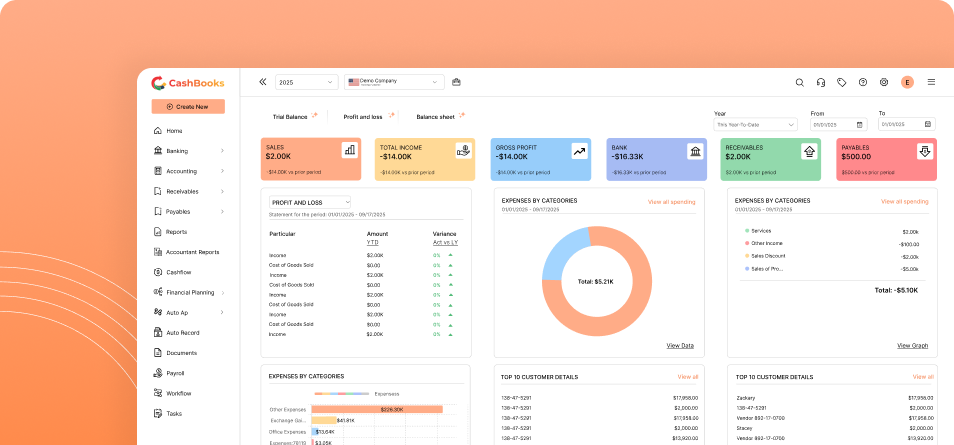
CashBooks.io provides AI-powered bookkeeping solutions that automate transactions, organize financial records, and simplify accounting workflows for accounting professionals. The platform reduces repetitive tasks, improves record accuracy, and enables firms to spend more time on financial analysis and client management.
AI-Powered Transaction Management
The AI bookkeeping software for accountants organizes transaction data automatically, reducing manual classification work and improving processing speed. Our intelligent tools allow accountants to review financial information faster while maintaining accurate records.
Better Client Account Control
The platform provides centralized tools for managing multiple client accounts from a single location. Accounting firms can maintain organized financial data and consistent workflows across all clients.
Simplified Financial Reporting
Financial information is organized to simplify report generation and improve reporting efficiency. Users can access accurate reports quickly and share meaningful financial insights with clients.
Reduced Manual Workload
Routine bookkeeping tasks are automated to reduce manual effort and increase operational efficiency. This allows accountants to spend more time on financial analysis, planning, and client support.
Organized Accounting Records
We keep financial records structured and easy to access whenever they are needed. Well-organized accounting data provides better financial visibility and supports informed business decisions.
Our Expert Perspective
Accounting workflows are moving from manual processes toward intelligent automation. Based on accounting industry experience, automation creates the strongest results when technology supports professional expertise.
AI tools are valuable because they handle repetitive activities and allow accountants to focus on analysis, review, and client advisory services. Human judgment remains important for understanding financial situations and making informed decisions.
Accounting firms should evaluate AI bookkeeping software for accountants based on accuracy, security, usability, and workflow requirements. The right platform can create stronger accounting processes while maintaining professional standards.
FAQs
What is AI Bookkeeping Software for Accountants?
AI bookkeeping software for accountants uses artificial intelligence to automate tasks like transaction categorization, reconciliation, expense tracking, and financial reporting.
How Does AI Bookkeeping Software Save Time For Accountants?
AI bookkeeping software saves time by automating data entry, transaction matching, invoice organization, and report preparation tasks.
What is Automated Bookkeeping Software Used For?
Automated bookkeeping software manages financial records, tracks expenses, categorizes transactions, completes reconciliations, and creates reports with less manual effort.
Can AI Bookkeeping Software Manage Multiple Client Accounts?
Yes, AI bookkeeping software helps accounting firms manage multiple client accounts with organized records and consistent workflows.
How Do I Choose The Best Bookkeeping Software For My Accounting Firm?
Choose bookkeeping software based on automation features, security, usability, integrations, and the specific needs of your accounting workflow.