
August 25, 2026
In this article
- What You Will Learn From This Blog
- Why Accounting Firms Are Switching to an AI Accounting Platform
- Key Features to Look for in the Top AI Bookkeeping Tools for Accounting Firms 2026
- Top AI Bookkeeping Software Options Based on Features and Automation
- How an AI Accounting Platform Improves Productivity and Accuracy
- Common Mistakes to Avoid When Selecting AI Bookkeeping Software
- Why CashBooks.io Is a Smart Choice for Modern Accounting Firms
- Why CashBooks.io Is a Smart Choice for Modern Accounting Firms
- Our Expert Perspective
- Key Takeaways
- FAQs
The top AI bookkeeping tools for accounting firms 2026 are transforming accounting operations by automating routine tasks, improving financial accuracy, and reducing manual workload. These AI-powered solutions help firms manage transactions, reporting, and client services more efficiently while allowing accountants to focus on strategic financial activities.
With advanced automation features, accounting firms can handle growing client demands, maintain better financial records, and make informed decisions with greater confidence.
Selecting the right solution requires more than checking automation features. Accounting firms need software that matches their business size, client requirements, security expectations, and reporting needs.
A reliable AI accounting platform should combine automation with accurate financial management features to create a balanced accounting workflow.
This blog explains the top AI bookkeeping tools for accounting firms 2026, their important features, comparison points, benefits, and factors firms should consider before selecting bookkeeping software.
What You Will Learn From This Blog
- Key reasons accounting firms are adopting AI bookkeeping solutions
- Important features to check before selecting AI bookkeeping software
- Comparison of the top AI bookkeeping tools for accounting firms 2026
- How an AI accounting platform improves accounting operations
- Common mistakes firms should avoid during software selection
- How CashBooks.io provides AI-powered bookkeeping solutions for modern firms
Why Accounting Firms Are Switching to an AI Accounting Platform
Growing Demand For Faster Accounting Services
Accounting firms manage multiple clients and financial tasks, making manual bookkeeping time-consuming. An AI accounting platform automates routine processes like transaction categorization and reconciliation while maintaining accuracy.
Reducing Manual Bookkeeping Errors
Manual data entry errors can impact reports, tax preparation, and financial decisions. The top AI bookkeeping tools for accounting firms 2026 use intelligent suggestions to identify issues and maintain cleaner records.
Better Client Reporting and Insights
Clients need clear financial reports to understand business performance and make decisions. An AI- Powered accounting platform organizes financial data and allows accountants to provide better insights.
Managing Increasing Client Workloads
Growing client demands and reporting periods can increase accounting workloads. AI bookkeeping solutions automate repetitive tasks and help firms manage transactions, expenses, and records efficiently.
Improving Collaboration Between Teams
Accounting teams often work across different locations and require updated financial information. A reliable AI accounting platform improves coordination by keeping records organized and accessible.
Key Features to Look for in the Top AI Bookkeeping Tools for Accounting Firms 2026
Automated Transaction Categorization
The top AI bookkeeping tools for accounting firms 2026 use AI-based categorization to review transactions and suggest suitable account entries. This reduces manual sorting time and improves bookkeeping accuracy.
Smart Bank Reconciliation
AI-powered reconciliation tools compare bank records with accounting data and identify missing, duplicate, or unusual transactions. These features allow accountants to complete reviews faster with better accuracy.
Invoice And Expense Management
AI bookkeeping software helps firms organize invoices, track expenses, and maintain accurate financial records. These features allow teams to monitor payments and improve financial visibility.
Financial Reporting Automation
An AI-Powered accounting platform automates financial reporting by generating statements, summaries, and performance reports from updated data. This reduces repetitive reporting work and saves accounting time.
Data Security And Compliance Features
Security is essential for firms managing sensitive financial information. Before selecting from the top AI bookkeeping tools for accounting firms 2026, firms should review data protection, access controls, and compliance features.
Integration With Accounting Systems
Accounting firms use multiple tools for payments, reporting, and client management. A reliable AI accounting platform should integrate with existing systems to create a more organized workflow.
Top AI Bookkeeping Software Options Based on Features and Automation
The selection of the top AI bookkeeping tools for accounting firms 2026 depends on automation features, reporting, integrations, pricing, and usability. Firms should compare solutions based on their workflow needs, client requirements, and long-term goals.
Each software option offers different capabilities, from bookkeeping automation to complete accounting management. A proper comparison helps firms select the right solution for their accounting operations.
QuickBooks Online With AI Features
QuickBooks Online offers transaction matching, expense tracking, invoicing, and reporting features for businesses and accounting professionals. Its AI features provide transaction suggestions, but firms seeking advanced automation may require additional solutions.
Xero With Smart Automation Features
Accounting firms evaluating the top AI bookkeeping tools for accounting firms 2026 should consider how each platform handles automation, reporting accuracy, and workflow management.
Xero provides cloud accounting features with bank reconciliation, invoicing, expense tracking, and reporting tools. Its automation capabilities help accounting teams manage repetitive tasks and maintain organized records.
Zoho Books With AI-Based Accounting Functions
Zoho Books provides invoicing, expense management, workflow automation, and reporting features for small and medium businesses. Firms should review its AI capabilities to ensure they meet future automation needs.
Sage Accounting With Intelligent Accounting Tools
Sage Accounting focuses on financial management, reporting, and transaction tracking through automation features. It can support firms that need structured accounting processes and detailed financial records.
CashBooks.io With AI-Powered Bookkeeping Automation
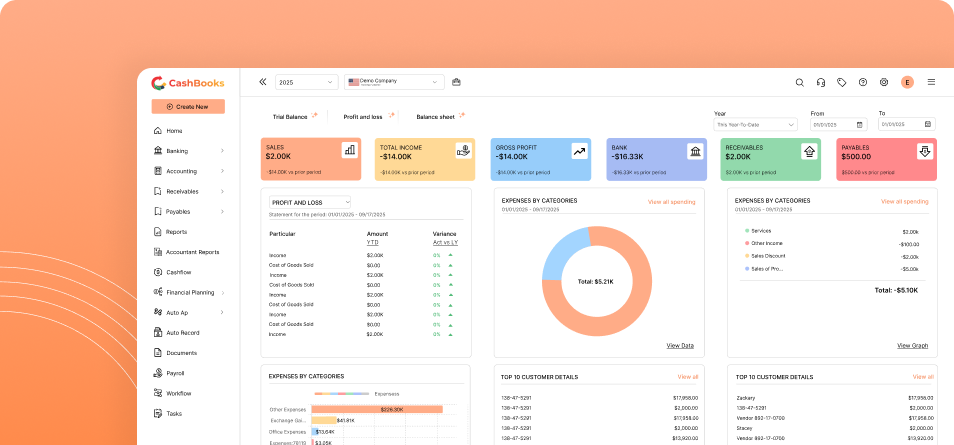
CashBooks.io combines AI-powered bookkeeping automation with essential accounting features for businesses and accounting firms. The platform helps manage transactions, invoices, reports, and financial data while maintaining professional control.
For firms comparing the top AI bookkeeping tools for accounting firms 2026, CashBooks.io provides AI capabilities with practical accounting functions in one platform.
Comparison Factors For Accounting Firms
When comparing AI bookkeeping solutions, firms should evaluate more than the number of features available. The right software should match business goals and client expectations.
Important comparison factors include:
- AI automation capabilities
- Accounting workflow features
- Reporting options
- User access management
- Data security standards
- Software integrations
- Scalability for future growth
A suitable AI accounting platform should provide accurate automation while allowing accountants to maintain professional oversight.
How an AI Accounting Platform Improves Productivity and Accuracy
Automating Repetitive Accounting Tasks
Bookkeeping includes many repeated activities such as data entry, transaction sorting, and invoice processing. Manual handling of these tasks consumes valuable time for accounting teams.
An AI accounting platform automates routine activities and allows accountants to focus on higher-value responsibilities such as financial analysis and client communication.
Faster Transaction Processing
Processing hundreds or thousands of transactions manually can create delays. AI-based bookkeeping systems analyze transaction information and provide recommendations for proper classification.
The top AI bookkeeping tools for accounting firms 2026 allow firms to process financial data faster while maintaining better accuracy.
Better Financial Data Organization
Organized financial records are important for accurate reporting and business planning. AI systems categorize financial information and maintain structured records.
A reliable AI-Powered accounting platform gives accounting teams better visibility into financial activities and reduces time spent searching for information.
Supporting Accountants With Smart Recommendations
AI does not replace accounting expertise. Instead, it provides recommendations that allow professionals to review information more efficiently.
Accountants can use AI-generated suggestions to identify unusual transactions, review expenses, and prepare reports with greater confidence.
Improving Client Service Quality
Accounting firms compete by providing accurate and timely services. Faster processing and organized financial information allow firms to respond to client needs more effectively.
The top AI bookkeeping tools for accounting firms 2026 enable professionals to spend more time on advisory work instead of spending most hours on manual bookkeeping tasks.
Creating Better Financial Visibility
Business owners need clear information to understand their financial position. AI tools organize financial data and create reports that explain important business trends.
An AI accounting platform gives firms the ability to provide clearer financial updates and meaningful insights to their clients.
Common Mistakes to Avoid When Selecting AI Bookkeeping Software
Choosing Software Based Only On Price
Lower pricing may appear attractive, but accounting firms should also evaluate features, security, integrations, and long-term value.
The cheapest option may not provide the automation or reporting features required for professional accounting services.
Ignoring Integration Requirements
Accounting firms often use multiple applications for payments, customer management, payroll, and reporting.
Selecting software without checking integration options can create additional manual work and reduce workflow efficiency.
Not Reviewing AI Capabilities Properly
Many software providers promote AI features, but the actual capabilities can differ significantly. While evaluating the top AI bookkeeping tools for accounting firms 2026, accounting firms should focus on AI features that improve productivity rather than relying only on promotional claims.
Practical automation capabilities can help reduce manual work and improve bookkeeping accuracy.
Overlooking Data Security
Financial information requires strong protection. Accounting firms should check security features before moving client data into any AI-based system.
Important areas include user permissions, encryption standards, backup options, and compliance practices.
Selecting Software Without Considering Growth
A bookkeeping solution should support the firm's future requirements. Software that works for a small client base may not perform well as the firm expands.
The top AI bookkeeping tools for accounting firms 2026 should offer flexibility for increasing users, transactions, and reporting needs.
Not Testing Before Implementation
Implementing new software without testing can create workflow problems. Firms should use trial periods, review features, and involve accounting teams before making a final decision.
A proper evaluation process ensures the selected AI accounting platform matches operational needs.
Why CashBooks.io Is a Smart Choice for Modern Accounting Firms
Why CashBooks.io Is a Smart Choice for Modern Accounting Firms
CashBooks.io combines AI-powered automation with essential accounting features, making it a strong option among the top AI bookkeeping tools for accounting firms 2026.
The platform simplifies bookkeeping tasks and allows accounting teams to manage financial operations efficiently from one place.
AI-Powered Bookkeeping Automation
CashBooks.io uses AI technology to automate repetitive bookkeeping activities, including transaction organization and financial data management. The automation allows accounting teams to focus more on financial review and client advisory services.
Complete Accounting Features In One Platform
CashBooks.io provides essential accounting features for managing invoices, expenses, transactions, and financial reports. The platform delivers a practical accounting experience without adding unnecessary complexity for businesses and firms.
Better Workflow For Accounting Teams
CashBooks.io helps accounting firms organize financial records and manage bookkeeping workflows for multiple clients efficiently. The platform allows professionals to maintain control while reducing manual effort through automation.
AI Advantage For Modern Businesses
The top AI bookkeeping tools for accounting firms 2026 should offer automation, financial insights, and better data management capabilities. CashBooks.io combines AI-based automation with essential accounting functions required for daily business operations.
Suitable Alternative For Businesses Comparing Accounting Software
Businesses comparing QuickBooks alternatives can consider CashBooks.io for accounting features combined with AI capabilities. The platform provides modern bookkeeping technology without requiring major changes to existing accounting workflows.
Our Expert Perspective
Accounting technology shows that successful AI adoption requires a balance between automation and accounting expertise. AI acts as a practical assistant that reduces repetitive work, allowing accountants to focus on analysis, planning, and client support.
When reviewing the top AI bookkeeping tools for accounting firms 2026, firms should focus on accuracy, security, usability, and long-term value rather than selecting software only because it includes AI features.
The best results come from combining AI capabilities with accounting expertise. A reliable AI- Powered accounting platform should make daily processes easier while allowing accountants to maintain proper review and control over financial information.
Key Takeaways
- AI bookkeeping tools are becoming important for modern accounting firms.
- The top AI bookkeeping tools for accounting firms 2026 focus on automation, accuracy, and better financial management.
- Accounting firms should evaluate software features, security, integrations, and scalability before selection.
- An AI accounting platform can automate repetitive tasks while allowing accountants to focus on advisory services.
- CashBooks.io combines AI automation with essential accounting features for businesses and accounting teams.
FAQs
What Are The Top AI Bookkeeping Tools For Accounting Firms 2026?
The top AI bookkeeping tools for accounting firms 2026 include solutions that offer automation, reporting, reconciliation, and financial data management features. The best choice depends on the firm’s workflow, client needs, and accounting requirements.
How Does AI Bookkeeping Software Help Accounting Firms?
AI bookkeeping software helps accounting firms automate data entry, categorize transactions, manage invoices, and reduce manual bookkeeping tasks.
What Features Should AI Bookkeeping Software Have In 2026?
AI bookkeeping software should include automated reconciliation, expense tracking, financial reporting, AI insights, security features, and accounting integrations.
Is AI Accounting Software Good For Small Accounting Firms?
Yes, AI accounting software is useful for small accounting firms because it saves time, reduces repetitive work, and helps manage client accounts efficiently.
Which AI Accounting Platform Is Best For Modern Accounting Firms?
The best AI accounting platform depends on business needs, but firms should choose software that offers automation, accuracy, security, and easy integration with existing tools.