
September 24, 2026
In this article
- What You Will Learn From This Blog
- Why Manual Bookkeeping Becomes Difficult for Small Businesses
- What Is AI Accounting Software for Small Business?
- How to Automate Accounting Processes With AI
- Which Accounting Tasks Should Small Businesses Automate?
- Common Mistakes When Automating Bookkeeping
- Make Routine Bookkeeping Work Easier With CashBooks
- Our Expert Insight
- Key Takeaways
- FAQs
You sit down to handle the books, only to find a long list of transactions waiting for you. Entering payments, sorting expenses, checking bank activity, and fixing small errors can turn a quick task into hours of work. AI accounting software for small businesses can take much of this routine work off your plate.
AI can bring in bank activity, suggest transaction categories, flag unusual or duplicate entries, and help match transactions during reconciliation. It does not mean handing over control of your books. The goal is to let software handle repeat tasks while you review the entries that need your attention.
This blog explains how to automate accounting processes in a small business, which tasks are worth automating, and what you should still check yourself.
What You Will Learn From This Blog
By the end of this blog, you will know:
- Why manual bookkeeping takes so much time.
- What AI accounting software for small businesses does.
- How to automate accounting processes with AI.
- Which book tasks are safe to automate.
- What errors can happen when too much work is left to AI.
- How CashBooks uses AI to help with day-to-day books.
- Why review is still key when books are automated.
Why Manual Bookkeeping Becomes Difficult for Small Businesses
Manual bookkeeping often starts in a simple way. A small firm may have only a few sales and bills each week. As the firm grows, the number of bank entries grows too.
Soon, the same tasks take up more time:
- Read each bank entry.
- Pick an account for each item.
- Add bills and sales.
- Check for repeat entries.
- Match bank data with book data.
- Check the books at month-end.
- Fix errors found during review.
The issue is not just time. Manual work can lead to missed entries and wrong account codes. A cost may be put in the wrong account. A bank entry may be added twice. A bill may not make it into the books.
Small firms also have less room for rework. The owner may be doing the books at night. A staff member may spend part of each week on data entry rather than client work.
With AI accounting software for small business, many of these repeat steps can run with less input. The software can use past choices, set rules, and bank data to make a first pass. The user can then check the items that need more care.
What Is AI Accounting Software for Small Business?
AI accounting software for small business is accounting software that uses AI to help with tasks such as data entry, transaction sorting, bank matching, and record checks.
It can learn from past work. For example, if the same bank charge has been put into an office cost account many times, the system can use that past choice when a new charge comes in.
A good AI system should not just make a guess and hide the result. It should make its work easy to check. Users should be able to see the entry, review the suggested account, and make a change when needed.
This makes AI accounting software for small businesses useful for firms that have a steady flow of bank activity but do not want to spend hours on each entry.
The best use of AI is not to remove the bookkeeper from the process. It is to reduce low-value work so the bookkeeper can spend more time on review, clean-up, and key bookkeeping issues.
How to Automate Accounting Processes With AI
Knowing how to automate accounting processes starts with the work that happens again and again. Look for tasks that follow a clear pattern and have enough past data to guide the system.
A common AI bookkeeping flow looks like this:
1. Bring in Bank Data
Bank feeds pull new activity into the books. This cuts the need to type each bank entry by hand.
2. Sort Routine Entries
AI can review the payee, amount, past choices, and account rules. It can then suggest the right income or cost account.
3. Learn From Past Choices
When you check and accept a choice, the system can use that history to make later picks more useful.
4. Flag Items That Need a Look
AI can flag odd, new, repeat, or unclear entries. This helps you focus on items that may need more care.
5. Match Bank and Book Data
The system can suggest matches between bank entries and items already in the books. You can then check the match before you accept it.
6. Review Before You Close the Books
Automation should end with a review. Check large entries, new payees, odd costs, and items that do not have a clear match.
This is the core of how to automate accounting processes without giving up control of the books.
Which Accounting Tasks Should Small Businesses Automate?
Not every task needs the same level of automation. Start with work that is repeatable and easy to check.
Bank Transaction Entry
Bank feeds can bring activity into the books with little manual input. This is often one of the first tasks worth automating.
Transaction Categorization
AI accounting software for small business can suggest accounts for common income and cost entries. This can save a large amount of time when the same types of entries occur each month.
Duplicate Checks
AI can look for entries that may have been added more than once. This gives you a chance to fix the issue before it affects your reports.
Bank Matching
Suggested matches can make bank reconciliation faster. The user still checks the match before it is marked as done.
Missing Entry Checks
Some systems can flag gaps or entries that do not fit the normal pattern. These checks can help catch issues that may be missed during a quick manual review.
Reports
Once the books are clean, report work can be much easier. Reports can give the owner, bookkeeper, or accountant a clear view of the firm's results.
The key is to automate the work that saves time without making it harder to review the final books.
Common Mistakes When Automating Bookkeeping
Automation can cut work, but it does not remove the need for good bookkeeping habits.
Automating Every Entry Without Review
A wrong AI choice can still create a wrong book entry. Review items that are large, new, or unclear.
Using Poor Account Rules
Bad rules can lead to bad results at scale. Review your chart of accounts and rules before you rely on them.
Ignoring New Types of Costs
A new vendor may not fit past patterns. Do not assume that an old rule is right for every new entry.
Skipping Bank Checks
Even with AI accounting software for small business, bank data should be checked against the books. Automation works best when you still review the final result.
Treating AI as the Accountant
AI can sort data and flag issues. It does not know every fact about your business. Tax rules, complex entries, unusual deals, and key business choices may still need a trained person.
Not Checking the Results
The main point of how to automate accounting processes is to save time while keeping the books right. Set a review routine so errors do not sit in the books for months.
Make Routine Bookkeeping Work Easier With CashBooks
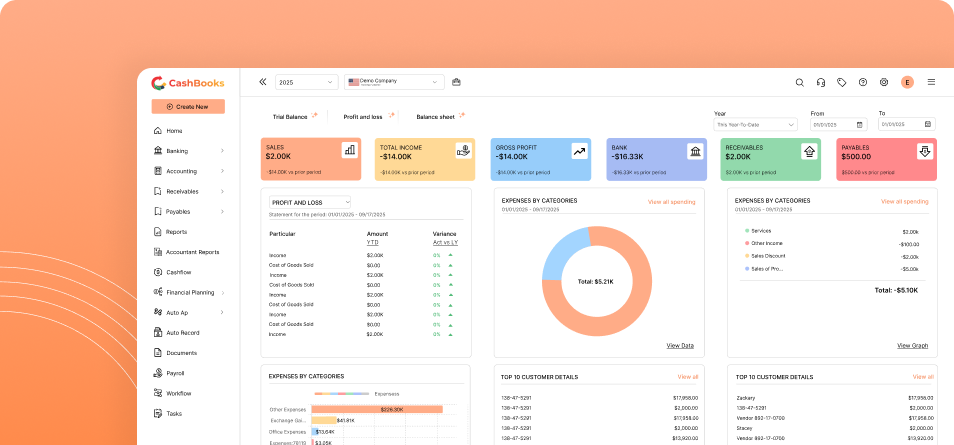
Small business accounting often involves more than recording income and expenses. You may also need to bring in bank data, keep transaction records up to date, check for errors, share reports with an accountant, and connect sales data from other platforms. CashBooks brings these needs together in one accounting system.
Core Accounting Tools
CashBooks includes the tools small businesses need for everyday bookkeeping:
- Bank Feeds: Bring bank activity into your accounting records.
- Auto Record: Reduce manual work when recording transactions.
- Complete Transaction Support: Handle different types of business transactions in one place.
- Review Engine: Help spot unusual, duplicate, or missing entries that may need review.
- Accountant Reports: Make it easier to share financial reports with your bookkeeper or accountant.
Connections for Your Business
Your accounting data may come from more than your bank. CashBooks supports Shopify Integration for businesses that sell online and QuickBooks Import for businesses moving their existing records. Integrations & Compliance also help businesses keep their accounting setup connected and ready for ongoing use.
Built Around Human Review
Our approach to automation is simple: software should take care of repeat work, while people stay involved when judgment is needed. CashBooks uses AI to reduce manual bookkeeping without turning the accounting process into a black box.
That approach is what makes CashBooks useful as AI accounting software for small businesses. It brings routine accounting work, review, reporting, and key business connections into one place while keeping the business owner or accountant in control.
Our Expert Insight
In our experience, the best place to start with bookkeeping automation is not the task that looks most complex. It is the task that happens often and follows a clear pattern. Routine bank transactions, recurring expenses, and common income entries are good examples.
Before you automate, make sure your chart of accounts and past records are clean. AI can work from past data, so poor records can lead to poor suggestions. After automation is in place, check your month-end results. Pay attention to corrected entries, uncategorized transactions, duplicate records, and items that often need manual changes.
The goal is simple: AI accounting software for small business should reduce routine work while giving owners and accountants more time to focus on the entries that need real judgment.
Key Takeaways
- Manual bookkeeping can take up a large part of a small firm's time.
- AI accounting software for small business can reduce repeat data entry and sorting work.
- Bank feeds can bring new activity into the books.
- AI can suggest account codes based on past work and set rules.
- Review tools can flag odd, duplicate, or missing entries.
- Suggested bank matches can speed up reconciliation.
- How to automate accounting processes should always include a review step.
- AI should support bookkeepers and owners, not replace their judgment.
- CashBooks combines bank feeds, AI categorization, review checks, reconciliation support, and reports in one accounting workflow.
FAQs
1. Is AI accounting software worth it for a small business?
Yes, if you spend a lot of time on repeat bookkeeping work. It can reduce manual entry and give you more time for review and business tasks.
2. How accurate is AI bookkeeping?
It can be highly accurate for routine transactions when your records and account setup are correct. New or unusual transactions still need a manual check.
3. Can a small business use AI accounting software without an accountant?
Yes. Owners can use it for routine bookkeeping, while an accountant can handle complex entries, tax work, and periodic reviews.
4. How long does it take to automate bookkeeping?
It depends on the state of your current books and the tasks you want to automate. Clean records and connected bank feeds can make setup much easier.
5. What bookkeeping tasks should not be fully automated?
Complex or unusual transactions should be reviewed before they are recorded. Large purchases, owner transactions, and unclear transfers are common examples.