September 15, 2026
In this article
- What You Will Learn From This Blog
- What Is a Bookkeeping Checklist for Small Business?
- Daily Bookkeeping Checklist
- Weekly Bookkeeping Checklist
- Monthly Bookkeeping Checklist for Small Business
- Quarterly Bookkeeping Checklist
- Year-End Bookkeeping Checklist
- How AI Bookkeeping Software Can Simplify Your Checklist
- CashBooks: An AI Bookkeeping Software That Can Help
- Our Expert Insight
- Key Takeaways
- FAQs
A missed receipt may seem minor. So can an uncategorized bank charge or an unpaid bill. But when these small gaps add up, month-end can turn into hours of catch-up work. A bookkeeping checklist for small business owners helps you stay on top of these tasks before they pile up.
You do not need to spend hours on your books every day. The key is to know what needs to be done each day, week, month, quarter, and year. You can also use AI bookkeeping software to handle routine tasks and leave more time for reviewing the numbers that need your attention.
This blog covers the key bookkeeping tasks for each stage of the year, so you can keep your records current and avoid last-minute cleanup.
What You Will Learn From This Blog
This guide shows you:
- Which bookkeeping tasks to do each day and week
- What to check at the end of each month
- Which records need a quarterly review
- What to check before the books close for the year
- Where AI tools can cut down on manual work
- How to keep your books clean and ready for tax work
You can use this bookkeeping checklist for small business needs as a set plan or adjust it to fit your firm.
What Is a Bookkeeping Checklist for Small Business?
A bookkeeping checklist for small business owners is a list of key tasks used to keep financial records up to date. It helps you know what to check, when to check it, and what needs more review.
The right tasks will vary by firm. A shop with daily sales may need more checks than a small firm with a few clients. Still, most firms need to track income, costs, bank activity, bills, invoices, and key reports.
A good bookkeeping checklist for small business work should also include a review step. Do not just enter each record and move on. Check that the entry is in the right account, the amount is right, and the record has proof such as a bill or receipt.
Daily Bookkeeping Checklist
Daily bookkeeping is about capturing new activity before it gets forgotten. You do not need a full review each day. Focus on getting the day's key records into your books.
Record Sales and Payments
Enter sales, customer payments, and other income as they happen. Make sure the date, amount, and payment method are correct.
Enter New Expenses
Record purchases and business costs while the details are fresh. Attach receipts or bills so you have proof for each entry.
Capture Cash Transactions
If your business accepts cash, record cash sales and payments right away. Cash activity is easy to miss when it is handled outside your bank account.
Save Receipts and Bills
Store new receipts, bills, and other financial records in the right place. Do not let paper receipts sit in a drawer until month-end.
Note Items That Need Follow-Up
Some transactions will not be clear at first. Mark them for review instead of guessing at the account or amount.
Weekly Bookkeeping Checklist
Weekly bookkeeping is about cleaning up the records and dealing with open items. This is also a good time to make sure your books reflect what happened during the week.
Clear Unfinished Transactions
Go through items that still need a category, match, or other action. Resolve what you can and leave only the items that need more information.
Review Customer Balances
Check open invoices and past-due balances. Follow up on payments that are late so unpaid sales do not go unnoticed.
Check Upcoming Bills
Look at bills that are due soon. Confirm the amount and due date, then plan for the cash needed to pay them.
Review Business Spending
Look for costs that are higher than normal or purchases you did not expect. A weekly check can help you catch spending issues while they are still easy to address.
Check Your Bookkeeping Workflow
Make sure bank feeds, payment tools, and other systems are bringing in the records they should. Fix a broken connection before it creates a larger gap.
Monthly Bookkeeping Checklist for Small Business
Monthly bookkeeping is the main accuracy check. By the end of each month, you should be able to trust the numbers in your books.
Reconcile Bank Accounts
Compare your books with your bank statements. Find the cause of any difference and correct it before closing the month.
Reconcile Credit Cards
Match credit card records with the monthly statement. Check charges, payments, refunds, interest, and fees.
Review Accounts Receivable
Look at unpaid invoices by age. Pay close attention to older balances that may need collection work or a closer review.
Review Accounts Payable
Check unpaid bills and make sure they are recorded in the correct period. This helps you see what the business still owes.
Review Profit and Loss
Look at revenue, costs, and profit for the month. Compare the results with prior months and investigate large changes.
Check the Balance Sheet
Review cash, assets, debts, and owner equity. Unexpected changes can point to an entry that needs correction.
Close the Month
Once key checks are complete, save the reports and records for that period. A clear month-end close makes future reviews much easier.
Quarterly Bookkeeping Checklist
Quarterly bookkeeping moves beyond transaction checks. The goal is to step back and see how the business is doing.
Review Business Trends
Compare revenue, costs, and profit across the past few months. Look for changes that may need action, such as rising costs or weaker sales.
Review Cash Flow
Check how much cash came in and went out during the quarter. Compare cash activity with profit because a profitable business can still face cash shortages.
Check Tax Records
Make sure the records needed for estimated tax payments and other tax work are in order. Your tax professional can help with questions about tax rules and payments.
Review Debt and Large Purchases
Check loan balances, interest, equipment purchases, and other major costs. Make sure these items are recorded correctly.
Review Your Chart of Accounts
Quarterly is a good time to see if your account list still fits the business. Remove accounts you no longer need and add new ones when your business activity has changed.
Review Access and Bank Connections
Check who can access your financial tools and which bank accounts or apps are connected. Remove access that is no longer needed.
Year-End Bookkeeping Checklist
Year-end is more than a final review. It is a chance to make sure the books are ready for tax work and the next year.
Use this bookkeeping checklist for small business year-end review:
- Complete all bank and credit card reconciliations
- Review unpaid invoices
- Review unpaid bills
- Check fixed asset records
- Review owner draws and business payments
- Check for missing receipts
- Review unusual or large transactions
- Make sure reports are complete
- Save key year-end records
- Give needed records to your accountant or tax pro
Do not wait until the last day of the year to start this work. A few short checks throughout the year can make year-end much easier.
How AI Bookkeeping Software Can Simplify Your Checklist
Some bookkeeping tasks are repetitive. This is where AI bookkeeping software can help. Instead of making every entry by hand, you can use software to handle parts of the work while you review the results.
For example, AI bookkeeping software can help sort bank transactions into likely accounts. It can also learn from past choices and use those patterns to make future suggestions.
Bank feeds can bring new transactions into the books. AI tools can then help match those transactions to records, flag items that look odd, and point out possible duplicate or missing entries.
This does not mean every task should run without review. Good bookkeeping still needs a person to check key entries and deal with items that need more context.
The best use of AI bookkeeping software is to cut down on routine work while keeping a clear review step in place.
CashBooks: An AI Bookkeeping Software That Can Help
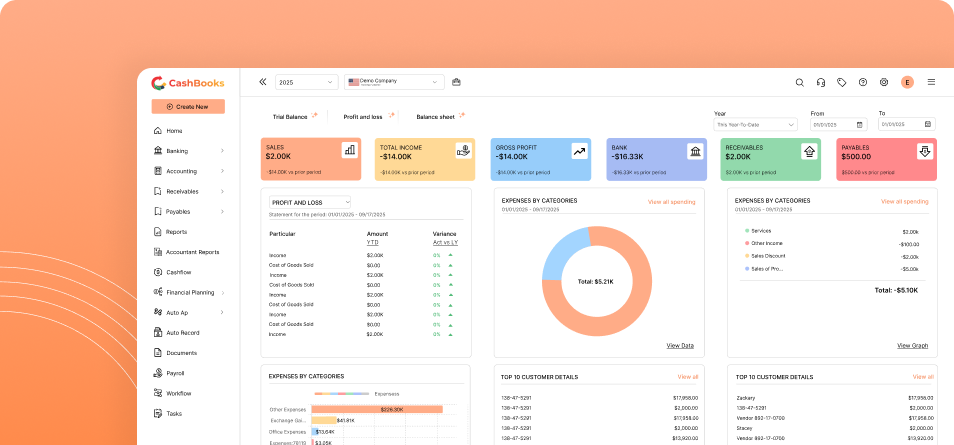
A bookkeeping checklist is useful, but keeping up with every task can still take time. CashBooks brings several of these steps into one workflow, from bringing in bank activity to recording transactions, checking entries, and preparing reports.
Start With Your Bank Activity
CashBooks Bank Feeds bring your bank transactions into your books. Auto Record can then help record routine transactions, so you spend less time entering the same type of data by hand.
Let AI Handle the First Pass
CashBooks uses AI to help categorize transactions based on your chart of accounts, past choices, and rules. It can also suggest matches when a bank transaction relates to an existing record.
Review What Needs Your Attention
Bookkeeping still needs a human check. CashBooks Review Engine helps focus that review by flagging unusual transactions, possible duplicates, missing entries, and items that may need a closer look.
Keep the Books Ready for Review
CashBooks provides Complete Transaction Support and Accountant Reports, so your records and key financial data are ready when you or your accountant need to review them.
For a bookkeeping checklist for small business owners, this means routine work can move from manual entry to a simple process: bring in, record, review, and report. The aim is not to skip the checks. It is to make those checks easier to manage.
Our Expert Insight
Not every bookkeeping task needs the same level of review. A $20 office supply charge is not the same as a $20,000 equipment purchase, owner transfer, loan payment, or unusual refund.
For small businesses, a better approach is to give extra review time to transactions that can change profit, cash, assets, or tax records. Set clear rules for these items and review them before you close the books.
Also, do not judge your bookkeeping only by whether every transaction has been entered. Your books should tell a clear story of how money came in, where it went, what you owe, and what the business owns. That is a better test of whether your bookkeeping process is working.
Key Takeaways
- Keep daily bookkeeping simple and current.
- Review bank activity on a set schedule.
- Reconcile bank and credit card accounts each month.
- Check unpaid invoices and bills often.
- Review financial reports for odd changes.
- Use quarterly checks to spot trends.
- Start year-end work before the year closes.
- Use AI bookkeeping software for routine tasks, but review key entries.
- Keep receipts and other proof with your records.
- Adjust your checklist as your business grows.
FAQs
1. What should be included in a bookkeeping checklist for small business?
Include income, expenses, bank activity, invoices, bills, reconciliations, reports, and record-keeping. Group these tasks by how often they need to be done.
2. How often should a small business do bookkeeping?
Daily or weekly checks work well for recording new activity and clearing open items. Bank and credit card accounts should be reconciled at least monthly.
3. Can a small business owner do their own bookkeeping?
Yes, if the business has simple transactions and the owner can keep accurate records. More complex books may call for help from a bookkeeper or accountant.
4. Can AI bookkeeping software help with small business bookkeeping?
Yes. AI bookkeeping software can help with tasks such as transaction categorization, bank feeds, matching, and finding entries that need review.
5. When should a small business use bookkeeping software?
Consider it when manual data entry takes too much time, or your transaction volume starts to grow. It can also help when you need easier access to current financial reports.