
September 10, 2026
In this article
- What You Will Learn From This Blog
- What Is AI Bookkeeping Software?
- What Does the Best AI Bookkeeping Software for Small Business Include?
- Choose the Best AI Bookkeeping Software for Small Businesses in 2026
- CashBooks: AI Bookkeeping Built for Small Businesses
- How These Features Work Together
- Why Automation Matters for Small Firms
- How to Choose AI Bookkeeping Software Based on Your Business Type
- Key Takeaways
- FAQs
Finding the best AI bookkeeping software for small business is no longer just about finding a way to record income and expenses. New AI tools can handle routine tasks like sorting transactions, updating bank records, and keeping books current, giving business owners less manual work to deal with.
But not every tool that uses AI offers the same value. What matters is how well it handles real bookkeeping tasks, how much work it saves, and how easy it is to review and correct the results. Features like reliable bank feeds, accurate categorization, fast setup, and clear reports can make a real difference.
In this blog, we will look at the leading AI bookkeeping software for small businesses in 2026, what to look for when choosing one, and how CashBooks approaches automated bookkeeping for small businesses.
What You Will Learn From This Blog
In this guide, you will learn:
- What AI bookkeeping software is and how it works
- What to look for in an AI bookkeeping tool
- Key names in the AI bookkeeping software space
- How CashBooks can help small firms cut down on bookkeeping work
- How to pick a tool based on your type of firm
- How automated bookkeeping software can help save time
What Is AI Bookkeeping Software?
AI bookkeeping software uses AI to help with tasks that once took a lot of time to do by hand.
A basic bookkeeping tool may let you enter and sort data. An AI tool can take a more active role. It can look at bank data, spot the type of cost, and sort a deal into the right group.
For small firms, this can mean less work each week.
For example, when a bank deal comes in, AI can look at the name, amount, and past data. It can then help tag the deal based on what it sees. You can check the tag and make a change if it is not right.
This is one of the key parts of automated bookkeeping software. The aim is not to take away all human checks. The aim is to cut down on work that does not need to be done by hand.
AI can also help with bank feeds. Once a bank link is set up, new deals can flow into the books. This helps keep data fresh and cuts the need to key in each deal.
The best tools keep the user in charge. AI can do the first pass, while the owner or bookkeeper can check key data before the books are closed.
What Does the Best AI Bookkeeping Software for Small Business Include?
Not all AI bookkeeping tools work in the same way. A tool may have AI, but that does not mean it will be a good fit for a small firm.
Here are key points to check before you choose one.
AI-Powered Transaction Categorization
- Categorizes income and expenses from bank data
- Learns from past categorization and user corrections
- Lets users review and correct suggested categories
Reliable Bank Feeds
- Connects business bank accounts
- Pulls transactions into the bookkeeping system
- Keeps records current without manual entry
Automated Bank Reconciliation
- Matches bank transactions with bookkeeping records
- Helps identify unmatched or duplicate transactions
- Makes month-end review easier
Human Review and Control
- Shows what AI has categorized
- Lets users correct errors
- Keeps the business owner or bookkeeper in control
Accurate Financial Reports
- Produces core reports such as P&L and balance sheet
- Turns categorized transactions into useful financial data
- Makes records easier to review with an accountant
Simple Setup and Daily Workflow
- Quick bank connection
- Minimal manual data entry
- Easy review process for owners who are not accounting experts
Choose the Best AI Bookkeeping Software for Small Businesses in 2026
The AI bookkeeping space has a range of options for small firms. Some of the names that small firms must consider in 2026 include:
- CashBooks
- QuickBooks
- Xero
- Zoho Books
- FreshBooks
Each business has its own needs, so the right fit will depend on the type of work you do, the way you handle your books, and how much work you want to automate.
When reviewing your options, focus on practical needs such as transaction categorization, bank feeds, reconciliation, ease of setup, reporting, and support. The best choice is the one that fits your workflow and reduces the amount of manual bookkeeping you need to manage.
CashBooks: AI Bookkeeping Built for Small Businesses
For a small business owner, bookkeeping is not just about recording transactions. The real work is keeping bank data current, putting transactions in the right categories, checking the books, and getting useful reports when needed.
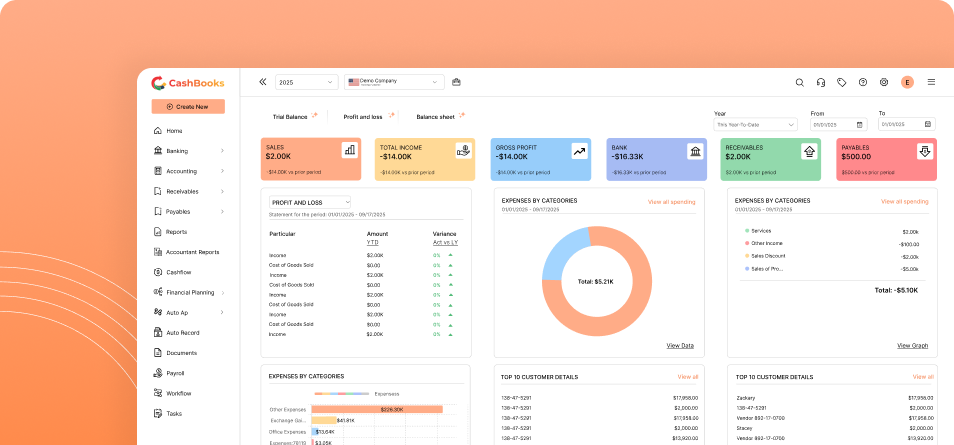
CashBooks is designed to automate much of that routine work. Its workflow brings bank feeds, transaction categorization, reconciliation, and reporting into one bookkeeping process.
AI Transaction Categorization
One of the biggest sources of manual bookkeeping work is sorting transactions.
CashBooks uses AI to help categorize transactions as they come into the books. Instead of manually assigning a category to every transaction, the system can use transaction data and past patterns to suggest the right category.
This is useful for recurring expenses such as software, rent, utilities, subscriptions, and other regular business costs.
The key benefit is not just fewer clicks. It is a more consistent bookkeeping process. When transactions are categorized in a consistent way, financial reports become more useful and easier to review.
Users can still review the categories and make changes when needed. That matters because AI should assist with bookkeeping rather than remove the need for review.
Smart Bank Feeds
Bank feeds are another key part of an automated bookkeeping workflow.
CashBooks lets businesses connect their bank accounts so transactions can flow into the bookkeeping system. Its bank feed system supports multiple bank connections and includes automatic transaction syncing and reconciliation.
This can reduce the need to download statements and enter transactions by hand.
Once transactions enter the system, they can move through the rest of the bookkeeping workflow. That means the bank feed is not just a way to import data. It becomes the starting point for categorization, reconciliation, and reporting.
Automated Reconciliation
Importing transactions is only one part of keeping books up to date. Those transactions also need to match the records in the books.
CashBooks includes auto reconciliation that uses transaction history to help match and reconcile bank activity.
This can help reduce the amount of manual matching that needs to be done during a bookkeeping review.
It also helps surface items that may need attention. That gives the business owner or bookkeeper a clearer list of transactions to check instead of forcing them to review every item from scratch.
A Short Setup for Small Business Owners
A bookkeeping tool can have strong features and still be hard to use.
CashBooks is positioned around a simple setup process, with the goal of getting a small business started in about 10 minutes.
That matters for owners who do not have a dedicated finance team. They need to connect their accounts, bring in their data, and start reviewing their books without spending days setting up a complex system.
The shorter the setup, the sooner the business can start getting value from automation.
Accountant Ready Reports
Bookkeeping software should not stop at transaction entry.
Once transactions are categorized and reconciled, the information needs to become useful financial data. This is where reports matter.
CashBooks provides reports that can help business owners review their financial position and share clean records with an accountant or bookkeeper.
For a small business, this creates a useful link between day-to-day bookkeeping and financial review. Instead of collecting files and cleaning up records before an accountant can work on them, the goal is to keep the books in a usable state throughout the year.
How These Features Work Together
The main strength of an AI bookkeeping system is not one AI feature on its own. It is the workflow.
With CashBooks, the process can be viewed as:
Connect bank accounts → Import transactions → Categorize transactions → Reconcile activity → Review records → Generate reports
Why Automation Matters for Small Firms
Bookkeeping can take up a large part of a small business owner's week, especially when financial records are updated by hand. Tasks such as entering transactions, sorting expenses, and checking records may seem minor, but they can take hours over the course of a month.
Automated bookkeeping software reduces this routine workload by handling repeat tasks within the bookkeeping process. This helps keep financial records current without requiring the owner to spend as much time on manual data entry.
Automation can also make bookkeeping more consistent. With less routine work to manage, business owners can spend more time reviewing their finances, planning expenses, and running their business. The goal is not to remove human oversight, but to make everyday bookkeeping easier to manage.
How to Choose AI Bookkeeping Software Based on Your Business Type
The right bookkeeping software depends on how your business handles its books. A freelancer may need a simple way to track income and expenses, while a small team may need more room to manage day to day finances. If you work with an outside bookkeeper, easy access and clean records may matter most.
For Freelancers and Solo Business Owners
If you handle your own books, look for software that is simple to set up and easy to use. Automated transaction categorization and bank feeds can reduce the amount of data you need to enter by hand.
You should also have clear reports that help you track income, expenses, and cash flow without needing deep accounting skills.
For Small Teams
A growing team may have more transactions and more people involved in financial tasks. In this case, choose software that can handle a higher volume of transactions and keep your records organized.
It should also make routine bookkeeping easy to review, so your team can spend less time on manual work and more time on daily business tasks.
For Businesses That Work With an Outside Bookkeeper
If an accountant or bookkeeper manages your books, focus on easy access, clear records, and useful financial reports. Your bookkeeper should be able to review transactions, make needed changes, and work with up to date financial data.
A good system should also make it easy for you to stay informed without having to manage every bookkeeping task yourself.
Choose Based on Your Workflow
The best AI bookkeeping software for small business is not always the tool with the most features. Choose one that fits how your business works today and can support your needs as they grow.
Think about who manages your books, how much manual work you do, and how often you need to review your finances. These factors can help you choose a bookkeeping system that saves time without making your financial workflow harder.
Key Takeaways
- AI bookkeeping can cut down on manual data entry and routine bookkeeping work.
- The best AI bookkeeping software for small business should offer accurate transaction categorization, reliable bank feeds, easy reconciliation, and clear financial reports.
- Look for software that is simple to set up and easy to use, especially if you manage your own books.
- Automated bookkeeping software can help keep financial records up to date with less manual work.
- Your choice should match your business size, bookkeeping needs, and who manages your books.
- CashBooks combines AI categorization, smart bank feeds, automated reconciliation, quick setup, and accountant-ready reports in one system.
FAQs
How accurate is AI bookkeeping?
AI bookkeeping can accurately handle many routine transactions, but it can still make mistakes. Review unusual, unclear, or high-value transactions before they are finalized.
Can AI bookkeeping replace a bookkeeper?
AI can handle many routine bookkeeping tasks, but a bookkeeper is still useful for complex entries, account review, tax work, and financial guidance.
What can AI bookkeeping software automate?
AI bookkeeping software can automate tasks such as transaction categorization, bank data entry, reconciliation, and parts of the reporting process. The exact features vary by software.
Can my accountant use AI bookkeeping software?
Yes. Your accountant or bookkeeper can use the same system to review transactions, check records, make adjustments, and prepare reports.
Is AI bookkeeping a good fit for a small business?
It can be a good fit if you want to reduce manual bookkeeping work and keep your financial records current. Your choice should match your business size, workflow, and accounting needs.