July 31, 2026
In this article
- What You Will Learn From This Blog
- Why Firms are Moving From Traditional Accounting Software to AI-Powered Solutions
- How AI Accounting Software for Firms Improves Daily Accounting Operations
- QuickBooks vs AI Accounting Software: Understanding the Main Difference
- How Automated Accounting Reduces Manual Data Entry and Bookkeeping Errors
- Limitations of QuickBooks for Growing Accounting Firms
- AI-Powered Transaction Categorization and Smart Reconciliation for Accounting Firms
- How AI Accounting Software for Firms Supports Accountants Beyond Basic Bookkeeping
- How CashBooks.io Provides AI-Powered Accounting Features For Modern Firms
- Our Expert Perspective
- Key Takeaways
- FAQs
AI accounting software for firms is transforming how accounting teams manage financial records, client data, and daily bookkeeping activities. Many accounting firms that previously relied on traditional platforms like QuickBooks are now exploring AI-powered solutions to improve accuracy, speed up financial processing, and manage complex operations more effectively.
Since firms handle large volumes of transactions, invoices, receipts, and reports, manual processes can take significant time and increase the possibility of errors.
QuickBooks continues to be a trusted accounting platform with strong features, reporting tools, and a user-friendly interface. However, growing firms often need more advanced capabilities to manage multiple clients and repetitive tasks.
AI-powered accounting solutions provide intelligent features such as transaction categorization, pattern recognition, and workflow automation, allowing accountants to focus more on analysis, advisory services, and client relationships. This blog compares AI accounting software with QuickBooks to understand which option is more suitable for modern accounting firms.
What You Will Learn From This Blog
- How AI-powered accounting tools differ from traditional software.
- Why accounting firms are adopting intelligent accounting platforms.
- Comparison between QuickBooks and AI-based solutions.
- How automation reduces bookkeeping workload.
- Benefits of smart reconciliation and transaction management.
- Factors firms should consider before choosing accounting software.
Why Firms are Moving From Traditional Accounting Software to AI-Powered Solutions
Accounting firms manage increasing financial data and client demands every day. Traditional software handles basic tasks, but growing firms need smarter tools for faster processing and better control.
Growing Need For Faster Financial Processing
Accounting teams spend hours managing transactions, reports, and financial records manually. AI accounting software for firms automates repeated tasks and reduces daily workload through intelligent workflows.
Increasing Volume of Client Data
Firms handling multiple clients need organized systems to manage large amounts of financial information. Modern tools provide better visibility and easier data management.
Demand For Better Accuracy
Small accounting errors can affect reports and business decisions. Automated checks identify unusual entries and support more accurate financial records.
Need For Smarter Business Decisions
Clients expect accountants to provide insights beyond basic bookkeeping. AI-powered tools analyze financial patterns to support better recommendations.
Moving Beyond Basic Bookkeeping Tasks
Traditional systems focus mainly on recording transactions and preparing reports. AI accounting software for firms adds intelligent features that reduce manual work and support strategic accounting activities.
How AI Accounting Software for Firms Improves Daily Accounting Operations
AI accounting software for firms simplifies daily accounting workflows by reducing repetitive tasks and organizing financial information. Accountants can manage routine activities faster while focusing on important financial responsibilities.
Automatic Transaction Management
AI platforms analyze transaction details and suggest suitable categories based on previous records. This reduces manual classification work and keeps financial records organized.
Smart Invoice Processing
AI tools capture invoice details, record amounts, and match payments with fewer manual steps. Accountants can review information faster and manage payments more effectively.
Faster Bank Reconciliation
AI-based systems compare bank records with accounting data to identify matching transactions. This reduces reconciliation time and highlights items that need review.
Better Expense Tracking
Intelligent tools capture expense details and organize records according to accounting needs. Firms can maintain accurate expense records with less manual effort.
Improved Client Management
AI accounting software for firms provides accountants with structured financial information that supports faster reporting and better client communication. Accountants can respond to client requests with updated and accurate information.
QuickBooks vs AI Accounting Software: Understanding the Main Difference
QuickBooks has been a trusted accounting platform for years and offers features such as invoicing, reporting, expense tracking, and bank connections. It remains useful for many small businesses and accounting teams.
However, firms with increasing workloads may look for solutions that provide more automation and intelligence. AI accounting software for firms focuses on reducing repetitive work through advanced technology.
| Comparison Area | QuickBooks | AI Accounting Software |
|---|---|---|
| Accounting Approach | Traditional platforms depend mainly on user input for recording, reviewing, and organizing financial information. | AI-powered solutions analyze financial data, automate routine tasks, and reduce repetitive accounting work. |
| Data Processing | QuickBooks records information from user entries and connected financial sources. Accountants often review transactions before finalizing records. | AI-based platforms analyze transaction history, identify patterns, and provide recommendations using available financial data. |
| Workflow Management | Managing multiple clients and large transaction volumes may require more manual effort from accounting teams. | AI-driven tools automate workflows and organize daily accounting activities more efficiently. |
| Transaction Handling | Accountants usually need to check and categorize many transactions manually. | AI tools can suggest categories and reduce the time required for transaction management. |
| Automation Level | Provides useful accounting features but has limited intelligent automation capabilities. | Focuses on automation by handling repetitive tasks and improving workflow efficiency. |
| Future Scalability | Suitable for many small businesses but may require additional tools as firms expand. | AI accounting software for firms supports long-term growth by providing scalable automation features that adapt to increasing client demands. |
| Best Suitable For | Businesses and teams looking for reliable accounting functions with standard features. | Accounting firms seeking smarter workflows, reduced manual work, and advanced automation. |
| Selection Factor | Choice depends on business size, accounting needs, and existing workflows. | Choice depends on the firm’s requirement for automation, efficiency, and future growth. |
How Automated Accounting Reduces Manual Data Entry and Bookkeeping Errors
Automated accounting allows firms to manage repetitive tasks while maintaining accurate financial records. By reducing manual data entry, modern platforms help accountants handle large amounts of information with better efficiency and control.
Reducing Repetitive Data Entry
Accountants often spend significant time entering transaction details, invoices, and expense records. AI accounting software for firms can capture transaction details automatically and reduce the workload associated with repeated financial data entry.
Minimizing Human Errors
Incorrect entries, duplicate records, and missing details can affect financial reports. Automated accounting tools identify unusual records and add extra checks before finalizing data.
Improving Record Organization
Accounting teams manage documents from multiple sources, including receipts, invoices, and bank statements. Automation organizes financial information and makes record reviews easier.
Saving Accountant Time
Routine bookkeeping activities can limit the time available for financial analysis and client support. Automation manages basic processes, allowing accountants to focus on higher-value tasks.
Maintaining Consistent Processes
Accounting firms need standardized workflows when managing multiple clients. Automated accounting creates consistent processes and improves control over daily accounting activities.
Limitations of QuickBooks for Growing Accounting Firms
QuickBooks remains a widely used accounting platform because of its strong accounting foundation. However, firms managing complex operations may experience certain limitations as their client base increases.
Understanding these challenges helps firms choose software that fits their future requirements.
Limited Advanced Intelligence
AI accounting software for firms provides advanced intelligence features that help accountants analyze data, automate decisions, and improve workflow efficiency. Firms may need additional tools for advanced automation and smarter workflows.
More Manual Review Requirements
Many accounting tasks still require manual checking, approval, and corrections. Growing firms may spend extra time reviewing large volumes of transactions.
Less Automation For Complex Workflows
QuickBooks manages standard accounting activities effectively but may not meet complex workflow needs. Firms handling large operations often require more advanced automation features.
Dependence on User Input
Traditional accounting software relies heavily on accurate manual entries from users. Incorrect inputs can affect financial records and reporting accuracy.
Challenges With Scaling Operations
QuickBooks may work well for small businesses but can become challenging as firms expand. AI accounting software for firms provides advanced automation for growing accounting needs.
AI-Powered Transaction Categorization and Smart Reconciliation for Accounting Firms
Transaction management and reconciliation are two important areas where accounting firms spend significant time. Errors in these processes can affect financial statements and client trust.
AI accounting software for firms uses intelligent automation to simplify transaction categorization, reconciliation, and financial data management.
Intelligent Transaction Classification
AI tools analyze transaction descriptions, amounts, and previous accounting patterns to suggest appropriate categories.
Accountants can review suggestions instead of manually assigning every transaction.
Faster Matching Of Financial Records
Matching bank transactions with accounting records requires accuracy and attention. Large transaction volumes make this process difficult to complete manually.
AI-based reconciliation tools identify possible matches and highlight records that need review.
Detection Of Unusual Transactions
Financial irregularities may occur due to incorrect entries, duplicate payments, or unexpected expenses. Manual checking can miss some issues.
AI systems identify unusual activity patterns and bring attention to possible problems.
Reducing Month-End Closing Time
Month-end closing requires accountants to review and finalize financial records. Delays can affect reporting schedules.
Automation allows firms to complete reconciliation tasks faster and prepare reports on time.
Better Accuracy For Client Accounts
Accounting firms manage sensitive financial information for their clients. Accurate records are essential for maintaining trust and meeting reporting requirements.
AI accounting software for firms strengthens financial data control by improving accuracy, consistency, and reliability across client accounts.
How AI Accounting Software for Firms Supports Accountants Beyond Basic Bookkeeping
Modern accounting firms are no longer limited to recording transactions and preparing reports. Clients expect accountants to provide financial insights, planning support, and better guidance for business growth.
AI accounting software for firms allows accounting professionals to move beyond repetitive bookkeeping tasks by providing intelligent features that manage routine processes and organize financial information.
More Time For Advisory Services
Accountants spend a large amount of time completing repetitive activities such as data entry, reconciliation, and record checking. These tasks reduce the time available for client advisory work.
AI-powered tools manage routine accounting activities, allowing professionals to focus on financial planning and strategic discussions.
Better Financial Visibility
Accountants need accurate and updated financial information to guide clients properly. Delayed records can affect reporting quality and business decisions.
AI-based platforms organize financial data and provide a clearer view of business performance.
Faster Client Responses
Clients often need quick answers about expenses, cash flow, and financial reports. Searching through multiple records can slow down communication.
Intelligent accounting platforms provide organized information that allows accountants to respond with confidence.
Improved Team Collaboration
Accounting firms usually have multiple team members working on different client accounts. Poor coordination can create delays and duplicate efforts.
Centralized financial workflows allow teams to manage accounting tasks with better organization.
Better Support For Business Growth
As firms grow, managing more clients requires efficient processes and reliable tools. Manual methods can become difficult to maintain at larger volumes.
AI accounting software for firms provides scalable features that help accounting teams manage increasing workloads while maintaining workflow efficiency.
How CashBooks.io Provides AI-Powered Accounting Features For Modern Firms
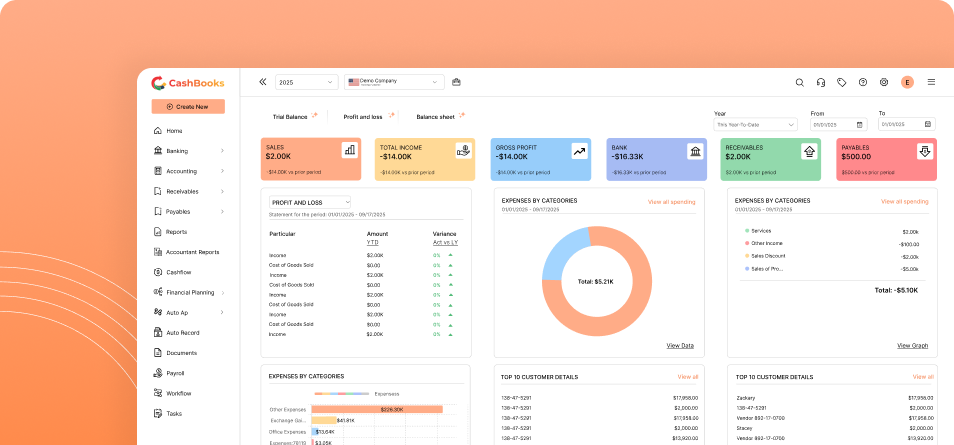
Accounting firms need software that combines traditional accounting functions with intelligent automation. CashBooks.io provides AI accounting software for firms designed to simplify financial management, automate repetitive tasks, and support modern accounting workflows.
Unlike traditional accounting platforms that mainly depend on manual input, CashBooks.io uses AI features to make accounting workflows more efficient.
AI-Based Transaction Management
CashBooks.io helps accounting teams organize transactions by analyzing financial information and reducing manual classification work.
Firms can manage daily accounting activities with improved speed and better record accuracy.
Smart Reconciliation Features
Bank reconciliation can take significant time when handled manually. CashBooks.io provides intelligent reconciliation capabilities that help accountants review and match financial records. This allows teams to complete reconciliation tasks with less effort.
Automated Bookkeeping Workflows
Routine bookkeeping activities can create a heavy workload for accounting teams. CashBooks.io reduces repeated processes through automation features available in modern AI accounting software for firms. Accountants can spend more time reviewing financial information and supporting clients.
Designed For Accounting Firms
Accounting firms require software that can handle multiple clients and large amounts of financial information. CashBooks.io focuses on providing tools that match professional accounting workflows. The platform gives firms an option to move beyond traditional accounting software limitations.
Our Expert Perspective
Accounting software selection should depend on a firm’s workflow, client needs, and future plans. QuickBooks remains a reliable choice for businesses that need standard accounting functions and established features.
However, firms managing multiple clients and high transaction volumes may need more advanced automation. AI accounting software for firms provides additional capabilities that reduce repetitive work, improve data processing accuracy, and allow accountants to focus on professional services.
The right software is not only about recording financial transactions. It should also improve workflow management, maintain data accuracy, and support accountants in delivering better value to clients.
Key Takeaways
- AI accounting software for firms reduces repetitive accounting tasks, lowers manual workload, and helps accountants focus on advisory services.
- QuickBooks provides strong accounting features but may require more manual reviews.
- AI-powered platforms use intelligent tools for transaction management and reconciliation.
- Automated accounting reduces data entry mistakes and improves workflow control.
- Accounting firms can spend more time on advisory services with AI-based solutions.
- CashBooks.io combines accounting features with AI capabilities for modern firms.
FAQs
What Is AI Accounting Software For Firms?
AI accounting software for firms is a platform that uses artificial intelligence to automate accounting tasks such as transaction categorization, reconciliation, and financial record management.
Is AI Accounting Software Better Than QuickBooks?
AI accounting software can be better for firms that need more automation and intelligent features. QuickBooks remains useful for businesses that require traditional accounting functions.
How Does Automated Accounting Reduce Errors?
Automated accounting reduces errors by limiting manual data entry and checking financial information through smart tools and automated processes.
Can Accounting Firms Use AI Software For Multiple Clients?
Yes, many AI-based accounting platforms are designed to help firms manage multiple client accounts with organized workflows and improved data handling.
How Does AI Accounting Software Improve Month-End Closing?
AI accounting software speeds up month-end closing by automating transaction matching, reconciliation, and financial record preparation.