
September 17, 2026
In this article
- What You Will Learn From This Blog
- How Do You Categorize Business Transactions?
- What Are the Main Categories for Business Transactions?
- What Is the Difference Between Manual and Automated Transaction Categorization?
- How Do Automated Transaction Categorization Tools Work?
- Should Every Automatically Categorized Transaction Be Reviewed?
- CashBooks: Automated Transaction Categorization Tools for Smarter Bookkeeping
- Our Expert Insight
- Key Takeaways
- FAQs
A coffee shop charge, a client payment, a bank fee, and a transfer may all show up in your bank feed, but each one has a different place in your books. To categorize business transactions correctly, you need to know what each entry is for and how it should be recorded.
For a small number of transactions, checking each one by hand may be simple. But when hundreds of entries come in each month, the same work can become slow and repetitive. Manual bookkeeping gives you control over each entry, while automated transaction categorization tools can sort routine transactions and flag items that need a closer look. This guide explains how both methods work and when each may fit your business.
What You Will Learn From This Blog
This blog covers:
- How to categorize business transactions
- The main types of business transactions
- Manual and automated ways to sort them
- How automated transaction categorization tools work
- Common errors to watch for
- When each method may fit your needs
- Why a review step still matters
How Do You Categorize Business Transactions?
To categorize business transactions, first look at what the money was for. A bank line by itself may not tell you enough. You may need the bill, receipt, note, or past records to know the right account.
A simple process looks like this:
- Check the date and amount. Make sure the entry is real and the amount is right.
- Read the bank or card detail. Look at the name, note, and other data tied to the entry.
- Find the business use. Ask what the money was used for or why it came in.
- Pick the right account. Put the entry in the account that best fits its use.
- Check for a receipt or bill. Keep proof for key costs and sales.
- Review the entry. Make sure it is not a transfer, refund, owner draw, or repeat entry.
For example, a payment to an office supply shop may be an office cost. A bank charge may go under bank fees. A payment moved from checking to savings is not a new cost. It is a transfer between accounts.
The goal is not just to put each line into a group. Good bookkeeping puts each line in the right place and keeps the same rule for like items.
What Are the Main Categories for Business Transactions?
The right chart of accounts will vary by firm, but most small firms deal with a core set of transaction types.
Income
Income is money the firm earns from sales or work. This can include client fees, product sales, and other business income.
Operating Expenses
These are costs tied to day to day work. Common examples are rent, ads, office costs, phone bills, software, travel, and supplies.
Cost of Goods Sold
A firm that sells goods may track the direct cost of making or buying those goods. This helps show the cost tied to sales.
Bank and Card Fees
Bank fees, card fees, and other service charges should have their own place when needed. This makes these costs easy to track in reports.
Assets and Equipment
A large item that will serve the firm for a long time may not be treated like a day to day cost. It may need to be set up as an asset based on the firm's books and tax rules.
Loans and Debt Payments
Loan payments need care because the full payment is not always an expense. Part may lower the loan balance, while part may be interest.
Owner Activity
Owner draws, owner funds, and other owner activity should not be mixed with normal sales or costs. The right account helps keep the firm's true results clear.
Transfers
A move from one bank account to another is not income or an expense. It should be marked as a transfer so the same cash is not counted twice.
These groups help categorize business transactions in a way that keeps reports clear. The exact account names should match the firm's chart of accounts and how it tracks its books.
What Is the Difference Between Manual and Automated Transaction Categorization?
Manual categorization means a person checks each entry and picks the account. It gives the bookkeeper direct control over each line.
This can work well when a firm has few entries or when each entry needs close review. It can also be useful when the business is new and the bookkeeper is still building a clear chart of accounts.
The issue is time. A firm with many bank and card entries may spend a large part of each month on repeat work. A person may also use a different account for similar costs from one month to the next.
Automated categorization uses software to suggest or assign accounts based on data, rules, past choices, and other signals. This can cut down on repeat work. It does not mean that every line should pass without a check.
The key difference is who does the first pass. With manual work, the bookkeeper makes the first choice. With an automated process, software can make a first suggestion, while the bookkeeper checks items that need more care.
How Do Automated Transaction Categorization Tools Work?
Automated transaction categorization tools start with transaction data from sources such as bank feeds or card feeds. The tool then uses set rules, account data, and past choices to help place each entry in the right group.
For example, suppose a firm pays the same software vendor each month. Once the account and rule are clear, the system may suggest the same category for future payments.
More advanced tools can use past choices and business activity to improve their suggestions. They may also flag entries that do not fit the usual pattern.
A useful automated flow can look like this:
Bank feed → Transaction review → Category suggestion → User check → Book update
This approach can help a bookkeeper focus on entries that need thought instead of starting from zero on every line.
Still, software needs good data and clear rules. A wrong rule can lead to wrong results at scale. That is why a review step is a key part of using automated transaction categorization tools.
Should Every Automatically Categorized Transaction Be Reviewed?
Yes. Automation can reduce the amount of work, but review still matters.
A repeat payment to the same vendor may be easy to confirm. A new vendor, large charge, refund, transfer, or odd entry may need a closer look.
A good review can check:
- Does the account fit the business use?
- Is the amount right?
- Is this a new or repeat charge?
- Could this be a transfer?
- Is there a duplicate entry?
- Does the transaction need a receipt or bill?
- Does it match the firm's normal pattern?
This matters because even strong automated transaction categorization tools can face unclear data. A bank description may be short. A vendor may sell more than one type of item. A payment may also change from one month to the next.
The best use of automation is not to remove human review. It is to move human effort toward the entries that need it most.
CashBooks: Automated Transaction Categorization Tools for Smarter Bookkeeping
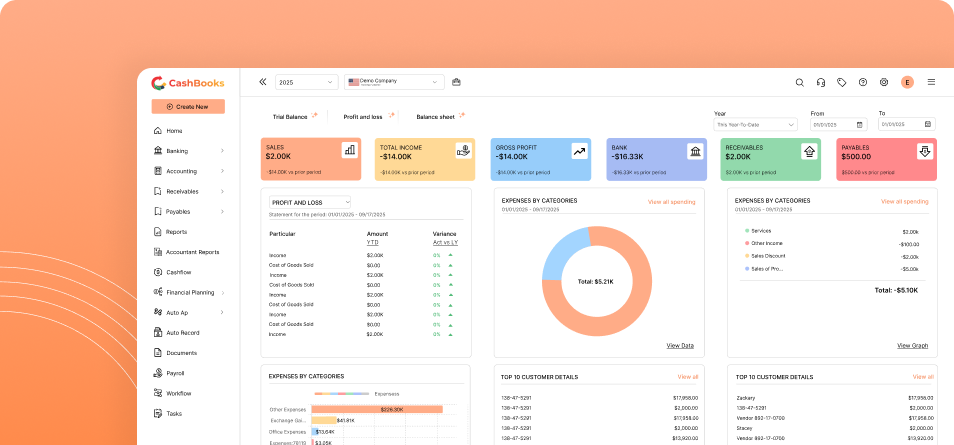
When a business has a steady flow of bank and card activity, the hard part is not finding transactions. It is knowing which ones need attention. CashBooks uses automated transaction categorization tools to handle clear, repeat entries while keeping review in the workflow.
Start With Bank Activity
CashBooks Bank Feeds brings bank transactions into the bookkeeping workflow. Instead of entering each item by hand, the bookkeeper can work from the latest bank activity and review entries as they come in.
Let AI Suggest the Right Category
Its Automated Transaction Categorization feature uses business activity, past choices, and account rules to suggest where a transaction belongs. If a vendor is used often for the same type of expense, those past choices can help guide future suggestions.
Keep Unclear Entries in Review
Not every transaction should be treated as routine. CashBooks can flag unusual activity and help identify duplicate or missing entries. The Review Engine gives the bookkeeper a place to check these items before they affect the books.
Connect Categorization With Reconciliation
Once transactions are reviewed, suggested reconciliation matches can help compare book activity with bank records. This links two tasks that often depend on each other: deciding what a transaction is and confirming that it was recorded correctly.
For businesses with a large number of repeat entries, this approach gives the bookkeeper a clear split between routine transactions that can be handled with automation and transactions that need human judgment. That is where CashBooks fits into the day to day bookkeeping process.
Our Expert Insight
When you categorize business transactions, focus on patterns, not just individual entries. If the same type of transaction keeps getting changed, the issue may be an unclear account, a weak rule, or a vendor that needs a better category.
A good bookkeeping process also tracks these repeat corrections. They show where the chart of accounts or transaction rules may need to be cleaned up. Automation can handle routine entries, but these patterns still need a bookkeeper's judgment.
The goal is not to automate every transaction. It is to make routine work easier while keeping enough review to catch entries that do not fit the usual pattern.
Key Takeaways
- Categorize business transactions based on their real business use.
- Keep income, costs, transfers, loans, assets, and owner activity in the right accounts.
- Manual work gives direct control but can take more time as entry volume grows.
- Automated transaction categorization tools can handle many repeat tasks and suggest account choices.
- Review unclear, new, unusual, or high value transactions before closing the books.
- Clear account rules help both bookkeepers and software make better choices.
- Automation works best when it reduces repeat work without removing human review.
FAQs
1. What is the best way to categorize a business expense?
Categorize it by its actual business purpose and the account in your chart of accounts.
2. How do you categorize a bank transfer?
Record transfers between business accounts as transfers, not income or expenses, to avoid double counting.
3. How should credit card purchases be categorized?
Categorize each purchase based on what was bought. The payment to the credit card is separate from the purchase.
4. What happens if a transaction is categorized incorrectly?
It can make your expense totals and financial reports inaccurate. Correct the transaction in the proper account.
5. Can automated tools replace a bookkeeper?
No. They can handle routine entries, but complex or unusual transactions still need human review.