
September 18, 2026
In this article
- What You Will Learn From This Blog
- What Does Bank Transaction Categorization Mean?
- How to Categorize Bank Transactions Step by Step
- Common Types of Business Bank Transactions and Their Categories
- How to Handle Difficult or Unclear Bank Transactions
- How CashBooks Helps Keep Bank Activity Under Control
- Our Expert Insight
- Key Takeaways
- FAQs
Bank activity can tell you a lot about how a business is doing, but only when each entry is put in the right place. A payment to a vendor, a sale deposit, a bank fee, and a transfer between accounts all show up in the same bank feed. They do not belong in the same account. Knowing how to categorize bank transactions helps keep your books clear and your reports useful.
It also makes bank reconciliation easier and gives you a better view of where money comes from and where it goes. For small businesses with many daily entries, a clear process can save time and cut down on bookwork.
What You Will Learn From This Blog
This blog covers:
- How to categorize bank transactions step by step.
- How to sort common business income, expenses, transfers, and other bank activity.
- How to handle unclear or unusual transactions without guessing.
- Common errors that can lead to inaccurate business records.
- Where automated transaction categorization tools can reduce repeat manual work.
- Why human review still matters for new, large, or unusual transactions.
What Does Bank Transaction Categorization Mean?
Bank transaction categorization means assigning each bank entry to the right account in your books. The account shows what the money was for. It may be sales income, office costs, rent, bank fees, loan payments, owner draws, or another account in your chart of accounts.
The goal is not just to label each entry. The goal is to record the true business reason for the money movement. That is why how to categorize bank transactions should start with the purpose of the entry, not just the name shown on the bank statement.
For example, a payment to a phone company may be a business phone cost. A deposit from a customer may be sales income. A move from checking to savings is a transfer, not new income.
Good categories also make your profit and loss report more useful. If costs are placed in the wrong accounts, you may get a poor view of your actual spending.
How to Categorize Bank Transactions Step by Step
A set process makes how to categorize bank transactions much easier to manage. Use the steps below for each entry.
1. Review the Bank Description
Start with the name, date, amount, and other details shown in the bank feed. The bank description may tell you the vendor or source of the money.
Do not rely on the name alone. A vendor may sell more than one type of item, so the charge may need a closer look.
2. Find the Business Purpose
Ask why the money was paid or received. Was it for a sale, rent, supplies, travel, software, payroll, a loan, or another business need?
This step is central to how to categorize bank transactions because the same vendor can have more than one type of charge.
3. Choose the Right Account
Match the business purpose to the proper account in your chart of accounts. Use the same account for similar costs when the business purpose is the same.
For example, regular office supply costs should not move between office supplies, general expenses, and other costs without a clear reason.
4. Check for Personal Activity
Keep personal spending out of business expense accounts. If a personal charge appears in a business account, mark it based on how your books handle owner activity instead of treating it as a business cost.
This is an area where how to categorize bank transactions needs care because a wrong choice can make business expenses look higher than they are.
5. Check for Transfers
A transfer between two business bank accounts is not income or an expense. It is a move of cash from one account to another.
The same rule applies when money moves between a checking account and a business savings account. Record the transfer in a way that does not change income or expense totals.
6. Keep Proof for Key Entries
Save receipts, bills, invoices, and other records that support the entry. This is most useful for large costs, new vendors, and items that may be hard to explain later.
Good records also make review work easier for a bookkeeper or accountant.
7. Review Before You Close the Period
Before a month is complete, look at new, unusual, or unclear entries. A quick review can catch wrong accounts, duplicate entries, missing records, and missed transfers.
That final check is an important part of how to categorize bank transactions because even a good process can miss an unusual item.
Common Types of Business Bank Transactions and Their Categories
Knowing the common types can make how to categorize bank transactions faster.
| Bank Transaction | Common Category |
|---|---|
| Customer payment | Sales or service income |
| Rent payment | Rent or lease expense |
| Office supplies | Office expense |
| Bank service fee | Bank fee expense |
| Business loan payment | Loan payment, with interest split as needed |
| Owner money added to business | Owner contribution |
| Owner money taken from business | Owner draw |
| Transfer between business accounts | Transfer |
| Customer refund | Refund or reduction of sales |
| Vendor refund | Reduction of the related expense |
These are common examples, not fixed rules for every business. The right account depends on the purpose of the entry and the business chart of accounts.
For example, a marketing firm may place ad spend under marketing expense, while a retailer may track some ad costs in a more detailed way. A clear chart of accounts should match the way the business tracks its costs.
How to Handle Difficult or Unclear Bank Transactions
Some entries are easy to sort. Others need more work. Knowing how to categorize bank transactions also means knowing when not to guess.
Unknown Charges
If the bank description does not make the charge clear, check the receipt, card record, vendor site, or other business records. If you still cannot confirm the purpose, leave it for review rather than forcing it into an account.
Mixed Purchases
A single payment may include items for more than one account. If the records support a split, divide the amount based on the actual items bought.
Duplicate Entries
A charge may appear twice because of a duplicate import or another record issue. Check the bank source and accounting record before adding another entry.
Refunds
A refund should be linked to the original type of cost or sale when that gives the clearest record. Do not treat every refund as new income.
Loan Payments
Loan payments can include both principal and interest. They should not always be posted as one simple expense. The loan record or statement can help show the right split.
These cases show why how to categorize bank transactions is not just a matter of matching words. It takes context and review.
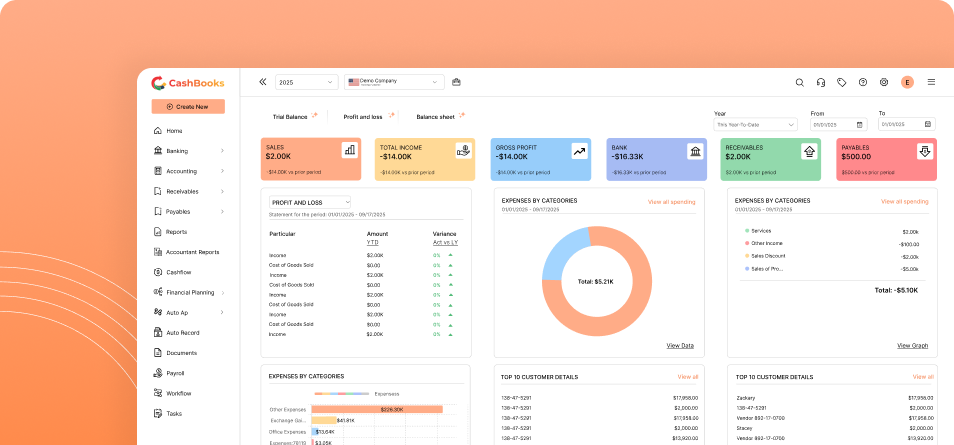
How CashBooks Helps Keep Bank Activity Under Control
In day to day bookkeeping, not every bank entry deserves the same amount of attention. Recurring charges can follow known rules. New vendors, large payments, refunds, and odd entries need a closer look. A good system should make that difference clear.
CashBooks is built around this type of workflow:
- Bring in Bank Activity: Bank Feeds pull new transactions into the books, so there is less need for manual entry.
- Handle Repeat Entries: Transaction categorization uses past choices, business activity, and account rules to suggest where each transaction belongs.
- Focus on Exceptions: The Review Engine highlights unusual, duplicate, or missing entries instead of making you search for them one by one.
- Check the Books: Suggested reconciliation matches help compare bank activity with the transactions already recorded.
- Keep Records Ready for Review: Accountant Reports give bookkeepers and accounting firms a clear view of the completed records.
This is where automated transaction categorization tools are most useful. They can take care of repeat work, while the business owner or bookkeeper keeps control of entries that need judgment. CashBooks brings these steps into one workflow, from the first bank feed to the final review.
Our Expert Insight
A bank description alone does not always tell you the right category. Check the vendor, amount, and business purpose before posting an entry, especially for new or unusual charges.
Pay extra attention to large payments, refunds, transfers, loan payments, and owner transactions. These are common areas where a wrong category can affect your financial reports.
Our rule is simple: automate routine entries and review exceptions. This keeps bookkeeping efficient while giving important transactions the attention they need.
Key Takeaways
- How to categorize bank transactions starts with the business purpose of each entry.
- Use a clear chart of accounts and apply the same rule to similar activity.
- Keep personal spending out of business expense accounts.
- Record transfers between business accounts as transfers, not income or expenses.
- Check unclear, new, high value, and unusual entries before final review.
- Keep receipts, bills, invoices, and other proof for key transactions.
- Automated transaction categorization tools can reduce repeat data work and suggest categories.
- Human review still matters when an entry does not fit a known pattern.
- Regular review and reconciliation help keep bank records and books in sync.
FAQs
1. Should bank transactions be categorized before reconciliation?
Yes. Categorizing transactions first makes it easier to compare the books with the bank statement. Any unmatched items can then be reviewed during reconciliation.
2. How do you categorize credit card payments in bank transactions?
A payment from a business bank account to its credit card is usually recorded as a transfer or credit card payment, not a new expense. The original card purchase should carry the expense category.
3. Are bank transfers considered income or expenses?
No. A transfer between accounts owned by the same business does not create income or an expense. Recording it as either can overstate business activity.
4. Can bank transaction categories be changed later?
Yes. A category can usually be changed if a transaction was posted incorrectly. Review the related reports afterward to make sure the correction did not affect other records.
5. What should businesses look for in automated transaction categorization tools?
Look for tools that learn from past entries, support clear account rules, flag unusual transactions, and allow users to review suggested categories. Automation should make routine work easier without removing human review.