
September 15, 2026
In this article
- What You Will Learn From This Blog
- What Is Automated Invoicing Processing Software?
- How Automated Invoicing Processing Software Saves Time
- How Invoice Automation Software Reduces Business Costs
- Key Features to Look for in Automated Invoicing Processing Software
- Who Can Benefit From Automated Invoicing Processing Software?
- How CashBooks Can Help With Automated Invoice Processing
- Our Expert Insight
- Key Takeaways
- FAQs
Sending bills, checking due dates, and tracking paid invoices can take up a lot of time. For a small firm, these tasks may fall to the owner or a small finance team. Each step can seem easy on its own, but the work adds up as the number of bills grows. Automated invoicing processing software can take care of many of these tasks with less manual work. It can help create bills, send them, track payments, and keep key data in one place. This can save staff time and help cut the cost of routine work.
The value is not just in sending bills with a few clicks. A good system can also help cut data entry work, limit errors, speed up follow-ups, and give you a clear view of what is due.
What You Will Learn From This Blog
This blog covers:
- What automated invoicing processing software does
- How it can save time
- How invoice automation software can lower costs
- Key features to look for
- Which firms can gain the most from it
- How CashBooks can help with invoice and book work
- What to check before you choose a tool
What Is Automated Invoicing Processing Software?
Automated invoicing processing software is a tool that uses set rules and data to handle parts of the invoice process with less human input.
A basic process may look like this:
- Add or pull in customer data.
- Create an invoice from saved details.
- Send the invoice to the client.
- Track its due date and status.
- Send a reminder when needed.
- Record the payment once it is made.
- Keep the record for later review.
The exact steps depend on the tool. Some systems focus on invoice creation, while others connect invoicing with payments, bank feeds, and accounting records.
This matters because invoice work often includes more than making a bill. Staff may need to check names, dates, rates, amounts, payment terms, and past records. They may also need to update books once the money comes in.
With automated invoicing processing software, much of this work can follow a set flow. Staff can then spend more time on tasks that need a human check.
How Automated Invoicing Processing Software Saves Time
Time is often the first clear gain from invoice automation. The goal is not to remove every review step. It is to cut the work that does not need to be done by hand.
Reduce Manual Data Entry
Typing the same client data into each invoice takes time. It also creates room for mistakes.
Automated invoicing processing software can use saved data such as client names, rates, terms, and item details. This means staff do not need to type the same data each time.
For firms that send many bills each month, even a small time cut per bill can add up.
Create Invoices Faster
A saved invoice format can help staff make new bills with less work. Recurring bills can be set up on a set cycle in tools that offer this feature.
This is useful for firms that bill clients each month for the same type of work. Instead of making each bill from scratch, staff can review the key details and send it.
Speed Up Invoice Follow-Ups
Unpaid bills can take more time than paid ones. Someone may need to check which bills are late, find the right client, and send a note.
Many invoice automation software tools can track due dates and send set reminders. This can cut the need for staff to check each bill by hand.
A good reminder flow can also help keep late bills from being missed.
Cut Time Spent Checking Invoice Status
Without a clear system, staff may need to search through email, files, and bank records to find out if a bill was sent or paid.
A central invoice record can show key details in one place. This makes it easier to check open, paid, and overdue bills.
How Invoice Automation Software Reduces Business Costs
Saving time also helps lower costs. But the cost gain goes beyond hours saved by staff.
Lower Admin Costs
Manual invoice work needs staff time. As invoice volume grows, more hours may go to data entry, status checks, and payment follow-ups.
Invoice automation software can handle many of these repeat tasks. This lets staff use their time on work that needs more skill and review.
Reduce Costly Errors
An invoice with the wrong amount, client name, or due date can lead to more work. Staff may need to fix the bill, send it again, and explain the error to the client.
Using saved data and set rules can help reduce such mistakes. It does not remove the need for review, but it can lower the number of basic errors.
Reduce Late Payment Costs
Late payments can put pressure on cash flow. They can also create extra work when staff need to send repeated notes or make calls.
Automated invoicing processing software can help by making sure invoices go out on time, and reminders are not missed.
Reduce Paper and File Costs
Online invoice tools can cut the need for paper bills, print work, and manual file storage. Digital records also make it easier to find old invoices when a client or bookkeeper needs them.
Key Features to Look for in Automated Invoicing Processing Software
Not all tools offer the same level of automation. Look for features that match the way your firm bills clients.
Automatic Invoice Creation
The system should make it easy to create invoices from saved client and item data. Recurring invoice support can be useful for firms with repeat billing.
Payment Tracking
You should be able to see which invoices are paid, open, or past due. Clear status data can reduce the need for manual checks.
Automatic Reminders
Look for tools that let you set reminders based on invoice due dates. You should also be able to review or change the reminder rules.
Accounting Links
Invoicing works best when invoice data can flow into the books. Connections with accounting tools or bank feeds can help reduce repeat data entry.
Invoice Review Tools
Automation should not mean sending every invoice without a check. Review tools can help staff spot issues before records are final.
Reports
Reports can help owners and bookkeepers track sales, unpaid bills, and payment trends. This gives the finance team a better view of cash due.
Who Can Benefit From Automated Invoicing Processing Software?
Automated invoicing processing software can help many types of firms, but the value is often clear for firms with repeat billing.
Small Businesses
Small firms often have limited staff. The owner may also handle billing and bookkeeping. Automation can cut the time spent on routine invoice tasks.
Freelancers and Consultants
Freelancers may send many invoices while also managing client work. A simple billing flow can help keep invoices on time without adding more admin work.
Service Firms
Agencies, repair firms, legal firms, and other service firms may bill by hour, project, or set fee. Saved rates and repeat invoice tools can help speed up this work.
Growing Firms
A process that works for 20 invoices may not work as well for 200. Automated invoicing processing software can help a firm handle more bills without adding the same amount of admin work.
Accounting Teams
Bookkeepers and accounting teams can also gain from clean invoice records. Less manual work can mean more time for review, account checks, and client support.
How CashBooks Can Help With Automated Invoice Processing
Good invoice processing should leave the books in good shape. In our experience, the work does not end when an invoice is sent. Payments still need to be recorded, sales data may come from different sources, and transactions need to be reviewed.
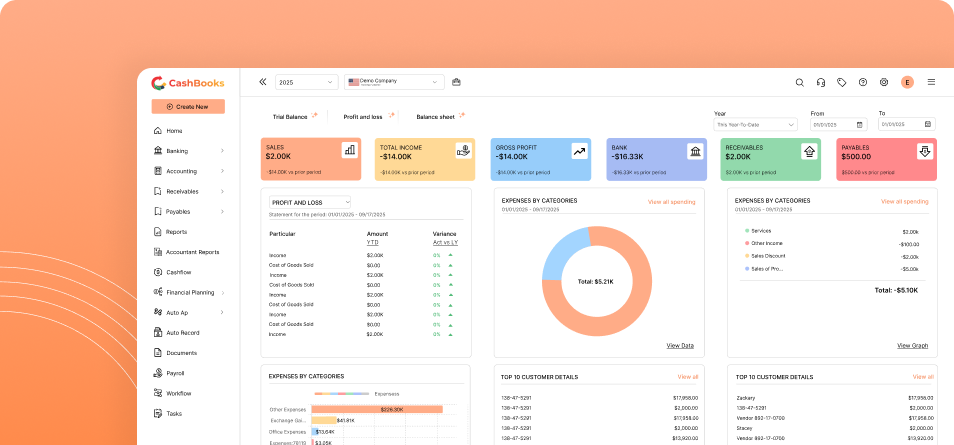
CashBooks connects these steps so businesses can manage invoice-related activity as part of their accounting workflow.
1. Start With the Source
Bank Feeds bring bank transactions into the books, while Auto Record helps capture financial activity as it comes in. This helps keep payment and income records current.
2. Keep a Review Step
Automation should still include human review. The Review Engine helps flag transactions that may need attention before the books are finalized.
3. Connect the Tools You Use
Businesses may manage sales across different platforms. Shopify Integration supports online sellers, while QuickBooks Import helps businesses move existing records when switching systems.
CashBooks also provides Complete Transaction Support and Powerful Integrations & Compliance for broader accounting needs.
4. Keep Records Ready for Review
The books should be easy for owners, bookkeepers, and accountants to check. Accountant Reports provide a clear view of financial activity when records need to be reviewed or shared.
This is how CashBooks approaches automated invoice processing software: as part of the full accounting process, not just a tool for creating invoices.
Our Expert Insight
Invoice automation is only useful when it supports accurate accounting. Sending an invoice faster does not help if the payment is recorded incorrectly or a duplicate entry ends up in the books. From an accounting standpoint, focus on three checks: Does the invoice match the customer record? Does the payment match the bank activity? Is the transaction recorded to the right account?
A good automated invoicing processing software should make these checks easier while still giving a bookkeeper or accountant a chance to review unusual items, refunds, credits, and partial payments. The goal is not to remove every manual step. It is to automate routine work while keeping the checks that protect the accuracy of the books.
Key Takeaways
- Automated invoicing processing software can reduce manual billing work.
- Faster invoice creation can give staff more time for other tasks.
- Automated reminders can help reduce missed payment follow-ups.
- Fewer manual entries can help lower basic invoice errors.
- Invoice automation software can reduce admin costs as invoice volume grows.
- Payment tracking gives firms a clearer view of unpaid bills.
- The best tool should connect invoicing with the wider accounting process.
- Automation should reduce repeat work while keeping key checks in place.
FAQs
1. How does automated invoicing affect cash flow?
It helps businesses send invoices on time, track unpaid balances, and follow up on overdue payments.
2. What types of invoices can be automated?
Common options include recurring, one-time, subscription, and service-based invoices.
3. Can automated invoice processing handle partial payments?
Some systems can track partial payments and show the remaining balance, which is useful for deposits and installment payments.
4. Does invoice automation replace a bookkeeper?
No. It handles routine tasks, while bookkeepers can review unusual transactions, refunds, credits, and account records.
5. What is the difference between invoice automation and automated invoice processing?
Invoice automation often focuses on creating and sending invoices. Automated invoice processing can cover a wider workflow, including payment records and accounting entries.