September 22, 2026
In this article
- What You Will Learn From This Blog
- What Does AI Bookkeeping Actually Do?
- What Can AI Automate in Bookkeeping?
- Can AI Replace a Bookkeeper Completely?
- AI Bookkeeping Software vs. Traditional Bookkeeping
- When Should a Business Use AI Bookkeeping Software?
- How CashBooks Applies AI to the Bookkeeping Process
- Our Expert Insight
- Key Takeaways
- FAQs
Can AI replace a bookkeeper? In 2026, this is a real question for small business owners who want to reduce manual work and keep their books in good shape. AI can now sort many bank entries, spot odd items, match data, and help with reports. But bookkeeping is more than moving data from one place to the next.
The key point is that AI can take on many repeat tasks, but it does not remove the need for review and sound judgment. The right use of AI is to handle work that follows clear rules while a person checks items that need context or care. This makes AI bookkeeping a support tool, not just a way to cut staff time.
So, can AI replace a bookkeeper in full? For most small businesses, the answer depends on the type of work, the size of the books, and how much review the records need.
What You Will Learn From This Blog
- What AI bookkeeping does today
- Which bookkeeping tasks AI can automate
- Where human review still matters
- Whether AI can replace a bookkeeper in full
- How AI bookkeeping software differs from manual work
- When a business may benefit from AI bookkeeping software
What Does AI Bookkeeping Actually Do?
AI bookkeeping uses data and set rules to handle parts of the bookkeeping process. It can read bank activity, find patterns, and use past choices to suggest how a new entry should be logged.
For example, if a business has paid the same phone bill each month, an AI tool may learn that pattern and suggest the same account for the new charge. A person can then check the entry and approve or change it.
AI can also help with bank feeds. New bank activity can flow into the books without the need to type each entry by hand. The system can then sort, match, or flag items based on the data it sees.
This does not mean every entry is right. A charge may look like a past charge but have a new use. A large payment may need a new account. A bank transfer may look like income when it is really money moved between two business accounts.
That is why good AI bookkeeping keeps people in the loop. The goal is to make review faster, not to remove review from the process.
What Can AI Automate in Bookkeeping?
AI can handle many tasks that once took a bookkeeper a lot of time. The exact tools vary by system, but common uses include:
Transaction Categorization
AI can review bank data and suggest income or expense accounts. It can use past choices, business rules, and the chart of accounts to make these picks.
Data Entry
AI can bring data from linked bank feeds and other sources into the books. This cuts down on manual entry and lowers the chance of typing errors.
Transaction Matching
AI can compare bank entries with records in the books. It may find a match for a payment, deposit, or other entry and suggest it for review.
Duplicate Checks
Some systems can flag entries that look like duplicates. This helps catch a charge that may have been entered more than once.
Unusual Item Checks
AI can look for entries that do not fit past patterns. A new vendor, large charge, or odd amount may be flagged so a person can take a closer look.
Reconciliation Support
AI can suggest matches between bank activity and book records. This can make the bank reconciliation process faster while still leaving the final check to a person.
Basic Reports
AI-based systems can help keep data in shape for reports such as profit and loss statements and balance sheets. The quality of these reports still depends on the quality of the books behind them.
These tasks explain why many businesses ask, "Can AI replace a bookkeeper?" AI can replace a large amount of manual work. That is different from replacing the full role.
Can AI Replace a Bookkeeper Completely?
Can AI replace a bookkeeper completely? For a simple business with few transactions, AI may handle much of the routine work. But even then, someone should check the books and deal with items that do not fit the normal pattern.
A bookkeeper does more than record transactions. They may need to ask why a payment was made, decide how an item should be treated, spot gaps in the records, and work with the owner or accountant to fix issues.
Consider a business that buys a laptop for $2,000. An AI tool may spot the charge and suggest an account. But the right treatment can depend on the business records and accounting rules. A person may need to check the details before the entry is final.
The same issue can come up with loans, owner draws, transfers, refunds, large purchases, new vendors, and mixed personal and business costs.
This is why the better question is not only "Can AI replace a bookkeeper?" It is also which parts of bookkeeping should AI handle, and which parts should a person review?
For many businesses, the answer is a shared workflow. AI handles high-volume work. A bookkeeper or business owner checks the work, fixes errors, and deals with items that need judgment.
AI Bookkeeping Software vs. Traditional Bookkeeping
Traditional bookkeeping often relies on manual entry, repeated checks, and set review steps. A bookkeeper may enter bank data, sort transactions, match records, and then check the books at set times.
AI bookkeeping software can reduce much of this manual work. Bank feeds can bring in new activity. AI can suggest categories. Matching tools can find possible links between bank data and book records. Review tools can flag entries that need a closer look.
The main difference is not that one method needs people and the other does not. Both need human review. The difference is where people spend their time.
With a manual process, a person may spend hours doing routine tasks before they reach the items that need real thought. With AI bookkeeping software, more of that time can shift toward review, error checks, and business questions.
This is also why claims that AI will remove every bookkeeping job can be too broad. The role can change as more routine work becomes automated.
When Should a Business Use AI Bookkeeping Software?
AI bookkeeping software can be useful when a business has regular bank activity and wants to cut repeat work. It may fit well for:
- Freelancers with steady business expenses
- Small firms with many bank entries
- Businesses that want faster month-end work
- Teams that work with an outside bookkeeper
- Businesses that need clean records for an accountant
- Owners who want more visibility into their books
The best fit is not based only on transaction volume. A business should also look at how clear its records are and how often someone can review AI suggestions.
A small business with simple books may use AI to handle most daily entry work. A larger or more complex business may still need a bookkeeper to manage the review and handle special cases.
The goal is not to ask "Can AI replace a bookkeeper?" before looking at the work itself. First, list the tasks done each month. Then decide which tasks follow clear rules and which need human judgment.
How CashBooks Applies AI to the Bookkeeping Process
The real value of AI bookkeeping is not simply doing more tasks. It is deciding which parts of the bookkeeping process can run with less manual work and which parts still need human review. CashBooks is built around that distinction.
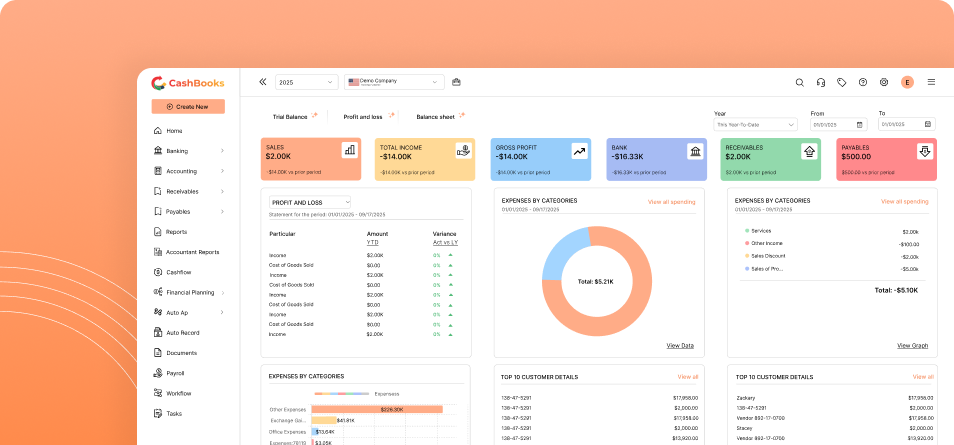
A typical workflow starts when Bank Feeds bring new business activity into the books. Auto Record helps capture routine transactions, while AI transaction categorization uses the business's past choices and chart of accounts to suggest the right account. The bookkeeper or business owner can then review those suggestions instead of entering each transaction from the start.
From there, CashBooks shifts attention to the entries that need a closer look. Its Review Engine can flag unusual, duplicate, or missing transactions. Suggested reconciliation matches help compare bank activity with existing book records. This gives users a way to automate routine work while keeping control over the entries that may need judgment.
CashBooks Features for AI Bookkeeping
| Feature | What It Does |
|---|---|
| Bank Feeds | Brings bank activity into the books for faster recording and review. |
| Auto Record | Helps record routine transactions with less manual entry. |
| AI Transaction Categorization | Uses business activity, past choices, and account rules to suggest transaction categories. |
| Review Engine | Flags unusual, duplicate, or missing entries that may need review. |
| Suggested Reconciliation Matches | Helps match bank activity with transactions already recorded in the books. |
| Complete Transaction Support | Supports the full transaction process from recording through review. |
| Accountant Reports | Gives outside bookkeepers and accounting firms reports they can use for review. |
| QuickBooks Import | Helps businesses bring existing QuickBooks records into CashBooks. |
| Shopify Integration | Connects Shopify sales activity with the bookkeeping workflow. |
| Powerful Integrations & Compliance | Supports connected workflows while keeping bookkeeping needs in focus. |
The result is a different way to divide bookkeeping work. CashBooks handles more of the repetitive activity, while people can spend their time on exceptions, corrections, and decisions that require business context. That makes AI bookkeeping software useful as a way to improve the bookkeeping process rather than simply as a replacement for the person doing it.
Our Expert Insight
In our experience, AI works best when it takes care of repetitive bookkeeping work and leaves people to handle the tasks that need judgment. The goal is not to automate every decision. It is to spend less time on routine entries and more time checking the records that matter.
Good results also depend on how the system is set up. A clear chart of accounts, consistent rules, and clean data help prevent the same mistake from being repeated across many transactions. New vendors, large purchases, transfers, and unusual charges should still get a closer review.
This is why we see AI as a way to improve the bookkeeper’s workflow, not simply remove the bookkeeper. When routine work takes less time, businesses can put more attention on accurate records, timely reconciliation, and financial reports they can trust.
Key Takeaways
- AI can automate many routine bookkeeping tasks.
- AI can sort, match, flag, and record business transactions.
- Human review still matters for unclear or unusual entries.
- AI works best when clear rules guide routine tasks.
- AI bookkeeping software can reduce manual work and review time.
- The need for a bookkeeper depends on the size and complexity of the business.
- Businesses should use AI to support sound bookkeeping, not remove all human control.
FAQs
1. Can AI replace a bookkeeper?
AI can handle many routine bookkeeping tasks, but businesses may still need a bookkeeper for complex entries, review, and accounting decisions.
2. What bookkeeping tasks can AI do?
AI can categorize transactions, process bank feeds, match entries, flag duplicates, support reconciliation, and help prepare reports.
3. Can AI bookkeeping make mistakes?
Yes. AI can misclassify transactions, especially when an entry is unusual or lacks clear business context. Human review helps catch these errors.
4. Is AI bookkeeping suitable for small businesses?
Yes. AI bookkeeping can reduce manual work for small businesses with regular transactions and straightforward books.
5. What should I check before choosing AI bookkeeping software?
Check its transaction automation, bank feeds, reconciliation tools, review features, integrations, and ability to keep records easy to trace.