September 24, 2026
In this article
- What You Will Learn From This Blog
- What Are AI Tools for Small Business Accounting?
- How AI Is Changing Small Business Accounting in 2026
- Best AI Tools for Small Business Accounting in 2026
- Key Features to Look for in AI Accounting Tools
- Small Business Automation Tools for Common Accounting Tasks
- CashBooks: AI Bookkeeping Software for Small Businesses
- Our Expert Insight
- Key Takeaways
- FAQs
Small business owners spend a lot of time managing books, invoices, expenses, bank transactions, and financial reports. Much of this work is necessary, but it does not all have to be done by hand. AI tools for small businesses can help automate routine accounting tasks, organize financial data, flag unusual transactions, and speed up everyday bookkeeping.
The right AI tool can do more than save time. It can help keep financial records accurate, reduce repetitive work, and give business owners and bookkeepers a clearer view of the numbers. But not every tool works the same way. Some focus on bookkeeping, while others handle expenses, invoicing, reconciliation, or reporting. The best choice depends on your accounting needs, current software, and how much of your workflow you want to automate.
What You Will Learn From This Blog
In this blog, you will learn:
- What AI tools for small business accounting can do
- How AI is changing small business books in 2026
- Which types of AI accounting tools to look for
- How small business automation tools can cut repeat work
- What key tools and AI skills can help with daily books
- How to pick a tool that fits your work flow
- How CashBooks can help with AI-based bookkeeping
What Are AI Tools for Small Business Accounting?
AI tools for small business accounting use AI to help with tasks that often take time when done by hand. These tasks may include sorting bank data, coding costs, finding odd entries, matching records, and making reports.
For example, an AI book tool may learn how a firm codes a type of cost. It can then use that past data to suggest the same code for a new entry. A bookkeeper can check the result and make a change when needed.
This is one key point to know about AI tools for small business: AI can help with a task, but that does not mean every task should run with no human check.
Good tools also help find data that needs a closer look. They may flag a new type of cost, spot a repeat entry, or show a gap in the books. This can help a small firm keep a tighter grip on its records.
How AI Is Changing Small Business Accounting in 2026
In 2026, AI tools for small businesses are moving from basic data entry help to wider book and review work.
One key change is smart data coding. AI can look at past entries and suggest a likely account for new bank data. This can cut the need to code each line from scratch.
Another change is in bank recs. AI can review open items and suggest matches. This can help bookkeepers close the books with less manual work.
AI can also help find odd data. A tool may flag a cost that does not match past trends or point out a duplicate entry. These checks can help a bookkeeper find issues before they affect a report.
Reports are also getting more useful. Some AI tools for small businesses can turn book data into a view that is easier to read. This can help an owner see sales, costs, cash, and other key numbers without digging through each entry.
The main goal is not to remove people from accounting. It is to let people spend less time on repeat work and more time on review, care, and business needs.
Best AI Tools for Small Business Accounting in 2026
The best AI tools for small businesses depend on the type of accounting work you need to improve. Instead of looking for one tool that does every job, start with the work that takes the most time.
1. AI Bookkeeping Software
AI bookkeeping tools help with core book tasks such as data entry, account coding, bank feeds, matching, and reports. These are useful for firms that want to cut manual work while keeping a review step.
Look for tools that learn from past book data and give clear reasons for their suggestions.
2. AI Expense Management Tools
Expense tools can help sort receipts, track costs, and move expense data into the right system. This can be useful when a firm has many bills, cards, or staff expenses.
The goal is to keep cost data in one place and cut the need to key in the same data more than once.
3. AI Invoicing and A/R Tools
Some AI tools can help with invoice work, payment checks, and follow-up. They may help find unpaid bills or match a payment with an open invoice.
These tools can be useful for firms that have many customer payments to track.
4. AI Document Tools
AI can read data from bills, receipts, and other files. This can help pull key data from a file before it enters the books.
For small firms, this can cut the time spent on copy-and-paste work and lower the risk of simple entry errors.
5. AI Reporting Tools
AI reporting tools can help turn book data into reports and views that are easier to review. They can help owners and bookkeepers spot trends in sales, costs, and cash.
When looking at AI tools for small businesses, make sure the reports are tied to clean source data. A fast report is not useful if the books behind it are wrong.
Key Features to Look for in AI Accounting Tools
When comparing AI tools for small business, focus on the features that affect your daily work.
Automated Transaction Coding
The tool should be able to suggest account codes based on past data. It should also let you review and change those choices.
Bank and Card Feeds
Good bank feeds help move new data into the books with less manual entry. Look for stable links and clear tools for review.
Smart Reconciliation
AI can suggest matches between bank data and book entries. This can speed up recs, but you should still be able to check the match before it is final.
Error and Duplicate Checks
A useful AI tool should help flag repeat entries, odd costs, or missing data. These checks can add a layer of control to the book process.
Reports and Data Views
Look for clear reports that show the numbers you need. Owners may need simple cash and profit views, while bookkeepers may need more detail.
Integrations
Your accounting tool should work well with the systems you already use. A strong AI feature is less useful if it creates more work by forcing you to move data by hand.
Human Review
This is one of the most important features. AI tools for small business should make it easy to review, fix, and approve AI work.
Small Business Automation Tools for Common Accounting Tasks
Small business automation tools can take care of repeat steps that follow a set pattern. This can help a team spend less time on basic work.
Bookkeeping Data Entry
Instead of entering each transaction by hand, automation can move data from connected accounts into the books. AI can then help sort or code that data.
Bank Reconciliation
Small business automation tools can pull bank data and suggest matches with book entries. A bookkeeper can then review the suggested matches and clear the items that are correct.
Expense Tracking
Receipts and expense data can be moved into a book system with less manual entry. AI may also help sort each cost based on past data.
Invoice and Payment Work
Automation can help create invoices, track open balances, and match payments. This can help firms keep a closer view of A/R without checking each item by hand.
Recurring Reports
Small business automation tools can help run reports on a set schedule. This can make month-end work more steady and reduce the need to build the same report each month.
Still, automation should not mean “set it and forget it.” A review step helps catch errors, bad data, and changes in a client’s work flow.
CashBooks: AI Bookkeeping Software for Small Businesses
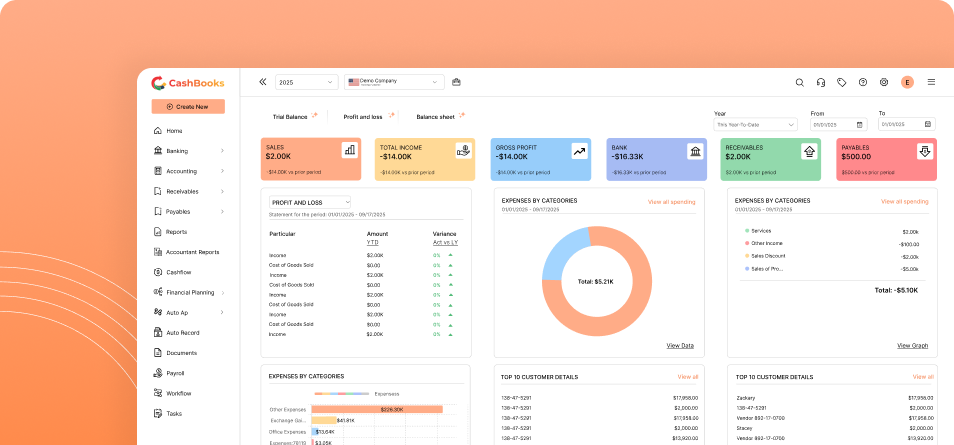
If you want to move beyond basic bookkeeping software, CashBooks brings AI into the full day-to-day bookkeeping workflow. It is designed for small businesses and accounting firms that need faster books, cleaner data, and less manual work without giving up control over their financial records.
Why Businesses Choose CashBooks
For everyday bookkeeping: CashBooks supports transaction management, categorization, reconciliation, financial reports, and ongoing book review in one platform.
For accounting firms: Its AI features can help bookkeepers handle more client work by reducing repetitive tasks and speeding up common bookkeeping steps.
For businesses moving from other systems: CashBooks supports QuickBooks Desktop and Excel imports, including more than 4,000 files at once, making it easier to bring existing records into a new workflow.
For teams that want to work faster: CashBooks is built around AI across its bookkeeping features, with real-time sync and tools that can help identify unusual, duplicate, or missing entries before they become bigger cleanup issues.
A Better Way to Scale Bookkeeping
CashBooks is not just another accounting platform with an AI feature added on top. Its focus is on using AI throughout the bookkeeping process so owners and accounting professionals can spend less time on routine work and more time on review, analysis, and client needs.
With setup in about 10 minutes and a 30-day trial, businesses can put the workflow to the test before committing. For accounting firms, it can also provide a way to increase bookkeeping capacity without relying on the same level of manual effort for every client.
Our Expert Insight
In our experience, the value of AI bookkeeping depends less on how much it can automate and more on how accurately it handles real-world transactions. Bank transfers, loan payments, owner draws, mixed personal and business expenses, and unusual purchases can still need a human review.
We recommend starting with routine transactions, reviewing the results regularly, and correcting patterns when they occur. Once the system consistently handles those tasks correctly, more of the bookkeeping workflow can be automated.
AI should make bookkeeping faster without making the books harder to trust. That balance is what matters most when choosing AI tools for small business.
Key Takeaways
- AI tools for small business can help with coding, recs, expenses, reports, and other book tasks.
- AI can reduce manual data entry and help spot errors or odd entries.
- Small business automation tools are useful for repeat work such as bank feeds, invoice tasks, and reports.
- Human review still matters for accounting accuracy and control.
- Look for tools that fit your current systems and work flow.
- Start with high-volume tasks before adding more automation.
- CashBooks combines AI bookkeeping tools with core book features for small businesses and accounting teams.
FAQs
1. Are AI accounting tools worth it for a small business?
They can be worthwhile when a business has a steady volume of bookkeeping work and wants to reduce manual data entry, reconciliation, or review time.
2. Can AI bookkeeping software work with QuickBooks?
Yes. Some AI bookkeeping platforms support data imports or integrations with QuickBooks. Check whether the tool supports your specific QuickBooks version and the type of data you need to move.
3. How much do AI accounting tools cost for small businesses?
Pricing varies by software, features, users, and transaction volume. Some charge a monthly fee, while others use plans based on usage or business size.
4. What bookkeeping tasks should I automate first?
Start with repetitive tasks that follow clear rules, such as transaction categorization, bank matching, receipt capture, and recurring reports. More complex or unusual transactions should still be reviewed.
5. Do AI accounting tools still need human review?
Yes. AI can handle routine bookkeeping work, but transactions involving loans, owner activity, transfers, mixed-use expenses, or unusual purchases may need human judgment.