
September 18, 2026
In this article
- What You Will Learn From This Blog
- What Are Accountant Ready Financial Reports?
- Why Small Businesses Need Accountant Ready Financial Reports Software
- Key Features to Look for in Accountant Ready Financial Reports Software
- How AI Bookkeeping Software Helps Keep Reports Accountant Ready
- How to Tell If Your Financial Reports Are Ready for an Accountant
- How CashBooks Helps Small Businesses Prepare Accountant Ready Reports
- Our Expert Insight
- Key Takeaways
- FAQs
Clean books matter most when someone else needs to trust them. A small business may track sales, bills, bank use, and costs all year, yet its books may not be ready for an accountant. Reports must be clear and tied to sound entries.
Accountant ready financial reports software helps bring these tasks into one flow. It can keep data in order, cut down on hand work, and give an accountant reports that are easier to check. The right AI bookkeeping software can also help keep that work on track.
What You Will Learn From This Blog
In this blog, you will learn:
- What makes a financial report ready for an accountant
- Which features to look for in accountant ready financial reports software
- How bank feeds, categorization, and reconciliation support clean reports
- How AI bookkeeping software can help with routine book work and review
- How to check whether your books are ready to share with an accountant
- How CashBooks supports the process from bank activity to accountant reports
What Are Accountant Ready Financial Reports?
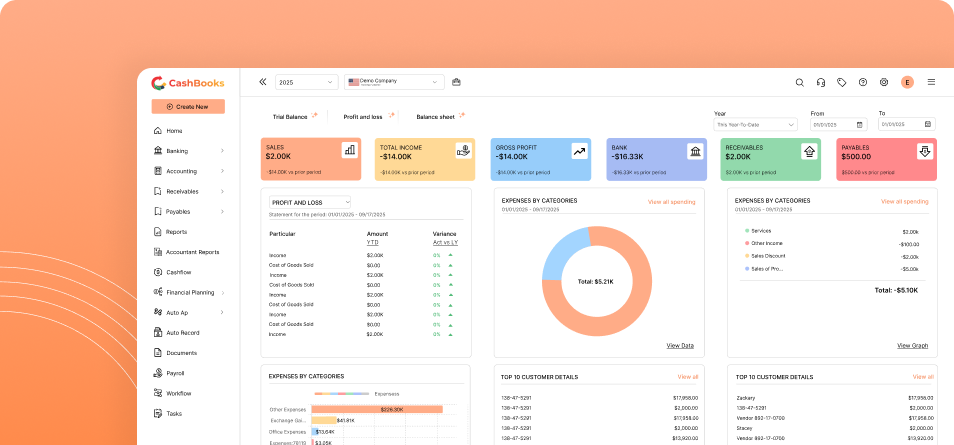
Accountant ready financial reports are built from books that are up to date, well kept, and easy to trace. Good accountant ready financial reports software should support this link from books to reports. Common reports include the profit and loss sheet, balance sheet, cash flow report, sales data, and key account lists.
The main test is not the look. An accountant should be able to trace key numbers to the source. Bank items, bills, sales, fees, loans, and key entries should be in the right place. Old or odd items should have a clear reason.
Good reports also use a clear chart of accounts. If one type of cost is placed in many areas, the report may give a poor view of the firm. This is why accountant ready financial reports software should do more than print reports. It should help keep the data clean as work is done.
Why Small Businesses Need Accountant Ready Financial Reports Software
Many small firms do not have a full time bookkeeper. The owner may enter bills, check bank data, send bills, and track sales between other tasks. An outside bookkeeper or CPA may take over at month end or year end.
Accountant ready financial reports software can help keep key data in one place and reduce gaps in the records. It can also help spot items that need a human check before a report is sent out.
That work can add to the cost. Clean books give the accountant more time to check trends and cash needs. The right software can also make month end less hard.
Key Features to Look for in Accountant Ready Financial Reports Software
Not all report tools are built for this task. Look for features that help keep books right before a report.
1. Clear Financial Reports
The tool should offer profit and loss, balance sheet, cash flow, and account detail. This is a core part of accountant ready financial reports software. Each report should have a clear date range and useful account detail.
2. Strong Bank Feeds
Bank feeds bring new bank activity into the books. A good system should make it easy to review new entries, avoid repeats, and tie bank data to the right account. This is a key part of accountant ready financial reports software because bank data often drives the daily book flow.
3. Smart Transaction Categorization
The tool should map each entry to the right income, cost, asset, loan, or other account. Rules can speed up repeat work, but new or odd entries need review.
4. Reconciliation Support
The software should match bank activity to book entries and show items that do not match. Suggested matches can cut hand work while leaving the final check to a person.
5. Review and Error Checks
Look for tools that flag duplicate entries, missing data, odd amounts, or items that may need a closer look. These checks can help catch small issues before they affect a report.
6. Easy Report Sharing
An accountant should get reports and key data without a long back and forth. Look for clear export tools and account detail.
7. A Clear Audit Trail
Each key change should be easy to trace, with a record of what was done and when.
How AI Bookkeeping Software Helps Keep Reports Accountant Ready
AI bookkeeping software can aid the work by handling repeat tasks and finding items that need review. Good accountant ready financial reports software uses these checks before reports are shared. It should not be seen as a way to skip human checks. Its main value is to reduce hand work while giving the user a clear list of items that need a look.
AI can learn from past choices in the chart of accounts. A bank fee that occurs each month may go to the same account. A new vendor or large charge may be flagged.
AI can also help with missing or duplicate entries. If two items look the same, the system can flag them before they affect the books. It may also find likely matches during bank reconciliation. These checks can support a better month end close.
For accountant ready financial reports software, this mix of speed and review is key. The software can do the first pass, but a person should check high value, new, or unusual entries. That final review helps keep reports fit for an accountant.
How to Tell If Your Financial Reports Are Ready for an Accountant
Before sending reports to an accountant, run a book check.
Start with the bank. Make sure key accounts have current data and the needed periods are reconciled. Review open items and large differences.
Next, scan income and cost accounts. Look for wrong accounts, old items, and costs that lack support. Check loans, owner draws, and transfers.
Then check unpaid bills and open invoices. Make sure sales and costs are in the right period. Review large or odd items and keep the source record.
Last, run the main reports. The profit and loss should fit the period. The balance sheet should show key assets, debts, and owner equity. The date and period should be clear.
If an accountant can pick a number, trace it to the books, and see why it was recorded, the report is ready. That is the real test of accountant ready financial reports software.
How CashBooks Helps Small Businesses Prepare Accountant Ready Reports
An accountant can only work with what is in the books. That is why the focus should be on keeping records clean before reporting time, not fixing problems after the reports are sent.
CashBooks supports that process in a few key areas:
- Capture: Bank Feeds and Auto Record bring business activity into the books, while QuickBooks Import helps businesses move existing records into CashBooks.
- Organize: Automated Transaction Categorization helps place income and expenses in the right accounts based on business activity and past choices.
- Review: The Review Engine points out unusual, duplicate, or missing entries so they can be checked before reports are finalized.
- Reconcile: Suggested matches help compare bank activity with the books and find items that still need attention.
- Report: Accountant Reports give outside bookkeepers and accounting firms access to organized financial data. Shopify Integration and other integrations also help keep sales and business activity connected to the books.
The result is a cleaner handoff. Instead of sending an accountant raw transaction data, the business can provide books that have already gone through capture, review, and reconciliation.
Our Expert Insight
A clean looking report is not enough. An accountant should be able to trace key numbers back to the records behind them.
When we assess accountant ready financial reports software, we look beyond its report list. The books should be easy to review, unusual changes should be clear, and key figures should have a clear record trail.
One practical rule matters most: do not wait until year end to clean up the books. A monthly review makes it easier to fix errors while the details are still fresh.
Key Takeaways
- Accountant ready financial reports software should keep reports clear and the books behind them sound.
- Bank feeds, transaction rules, review checks, and reconciliation support are key features.
- Reports should let an accountant trace key figures back to source entries.
- AI bookkeeping software can cut repeat work and flag items that need review. These are key checks for AI bookkeeping software.
- Human review still matters for new, high value, and unusual entries.
- CashBooks connects bank feeds, transaction work, review, reconciliation, and Accountant Reports in one flow.
FAQs
1. What financial reports does an accountant need from a small business?
Most accountants need a Profit and Loss, Balance Sheet, General Ledger, and reconciliation reports. They may also request cash flow, Accounts Receivable, or Accounts Payable reports.
2. Can my accountant access my accounting software?
Yes. Many accounting systems let you give your accountant direct access, so they can review records and pull the reports they need without relying on separate files.
3. What makes financial reports easy for an accountant to review?
Reports should use complete records, consistent account names, and reconciled bank data. Key figures should also be easy to trace back to individual transactions.
4. Can AI bookkeeping software create accountant ready reports?
AI bookkeeping software can help organize transactions and keep records up to date. The final books should still be reviewed before reports are shared with an accountant.
5. How often should a small business send reports to an accountant?
Monthly reporting works well for routine bookkeeping and review. Your accountant may need additional reports for tax work, year end close, or financial planning.